Ask Simmons

What is a Degree in Neuroscience?

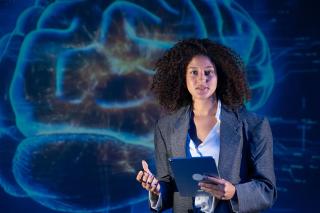
A woman making a presentation with a brain displayed on the wall behind her

A bachelor’s degree in Neuroscience is a gateway to solving one of life’s greatest puzzles: how our brain systems impact how we think, feel, and move in the world.

Neuroscience explores the intricate networks of the nervous system, which includes the brain, nerves, and spinal cord. This system transmits signals between the brain and body, regulating thoughts, memory, learning, emotions, movement, senses, sleep, and digestion.

Neuroscience majors gain a rich understanding of the nervous system, unlocking insights into brain disorders, which are caused by factors like genetics, infections, injury, and degeneration. They graduate ready to conduct research to improve the lives of patients with conditions like Amyotrophic Lateral Sclerosis (ALS), dementia, epilepsy, Multiple Sclerosis (MS), and stroke. 

What do neuroscientists investigate?

Neuroscience researchers work across many areas to push forward discoveries about the brain. 

They investigate how diseases develop by examining the brain’s communication systems. For example, they may study the buildup of harmful proteins seen in conditions like Alzheimer’s and Parkinson’s. Researchers also study how brain circuits change over time to better understand disorders that affect vision, movement, and behavior.

Their work also focuses on creating and testing new treatments. This can involve using genetic engineering to study how specific mutations cause disease. Neuroscientists also may experiment with drugs that protect or repair nerve cells, and explore methods to help damaged synapses grow back.

What careers can you do with a degree in neuroscience?

A BS in neuroscience can lead to a wide range of careers in healthcare, research, and other fields. More advanced roles require further education, such as a medical degree or a PhD. 

After graduation, many neuroscience graduates find roles such as clinical research assistant, laboratory technician, or science writer. Advanced careers include neurologist, neuroscientist, or neuropsychologist. Graduates also can apply the skills gained through this major to areas like consulting, technology, and marketing.


Study Neuroscience and Behavior at Simmons

Simmons University, based in Boston, Massachusetts, offers a Bachelor of Science in Neuroscience and Behavior. Our rigorous curriculum is interdisciplinary; it includes coursework in biology, psychological science, statistics, chemistry, biological psychology, research methods, and the philosophy of mind.

The University’s neuroscience program offers two engaging degree track options to tailor your studies:

  • Neurobiology Track — This track provides a deeper understanding of the biological mechanisms underlying brain function. You will explore the structure and function of the nervous system at the molecular, cellular, circuit, and organismal levels. Additionally, you will conduct original research and participate in a mentored research project or internship.
  • Cognitive & Behavioral Track — This track focuses on cognition, behavior, and emotion to better understand how mental processes arise from the complex interactions between the brain, behavior, and environment. Through coursework and hands-on research, you will apply cognitive and behavioral science to real-world questions.

Simmons graduates secure roles in biotechnology and pharmaceutical companies, academic research labs, behavioral health clinics, and clinical research centers. Many also pursue greater specialization in medical schools, physician assistant programs, and PhD programs.


Photo of Simmons Student Theo Hatfield

The health sciences program is very strong, and I like the fact that Simmons lies in close proximity to the Longwood medical campus.

Theo Hatfield ’25


Spotlight on Simmons Neuroscience and Behavior Students and Alums

A woman making a presentation with a brain displayed on the wall behind her

What is a Degree in Neuroscience?

A bachelor’s degree in Neuroscience is a gateway to solving one of life’s greatest puzzles: how our brain systems impact how we think, feel, and move in the world.


Sonia Vader enjoying a day near the water

Neuroscience Student Finds Purpose in Lab Research

Undergraduate neuroscience major and physics minor Sonia Vader ’26 shares her experience in the Focused Ultrasound Lab at Brigham and Women’s Hospital’s Radiology Department.


The six students in the 2025-26 Passionate Leaders cohort

Celebrating the 2025-26 Passionate Leaders Scholars

Six undergraduate scholars from different disciplines have been selected for a $3,000 grant that supports student-driven initiatives focused on advancing scientific research and improving communities, and represents unique voices through the arts and humanities.


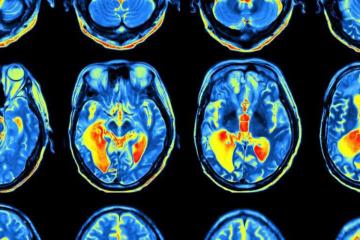
Brain imaging, courtesy of Wikimedia Commons and Creative Commons

Dix Scholar Researches Neuroscience

Sandra Bartlett ’26 is a Dix Scholar and transfer student studying Neuroscience and Behavior. We spoke with her about STEM research and mentorship at Simmons.


The 8 SURPASs scholars for 2025

Congratulations to the 2025 SURPASs Scholars

Eight undergraduate scholars from disciplines across Simmons have been selected to join the Summer Undergraduate Research Program at Simmons (SURPASs). SURPASs students receive the necessary funding and mentorship to execute an independent research project of their own design.


Sophie Salas ’25

Valuing Hands-on STEM Training and the Latinx Community

First-generation college student Sophie Salas ’25 reflects on finding community at Simmons and taking advantage of opportunities to make an impact, both in her community and academic work.


Sydney Gonyea wearing a field hocky uniform and Piper Kinney wearing a softball uniform

Simmons Student-athletes Excel On and Off the Field

Early mornings and late evenings. Long practices and rigorous academic courses. Team bonding and unforgettable moments. These are just a few of the hallmarks of the student-athlete experience at Simmons, according to field hockey player Sydney Gonyea ’25 and softball pitcher Piper Kinney ’26.


An aerial view of sidewalks on the Simmons University campus

Honoring the National Day of Racial Healing

January 21, 2025 — the day after Martin Luther King Jr. Day — is the ninth annual National Day of Racial Healing (NDORH). Created by the W.K. Kellogg Foundation, NDORH "is an opportunity to engage in collective action to create a more just and equitable world."


Publish Date

Author

Laura Pedulli