Master of Social Work (MSW): Accelerated 16-Month Program

Graduate

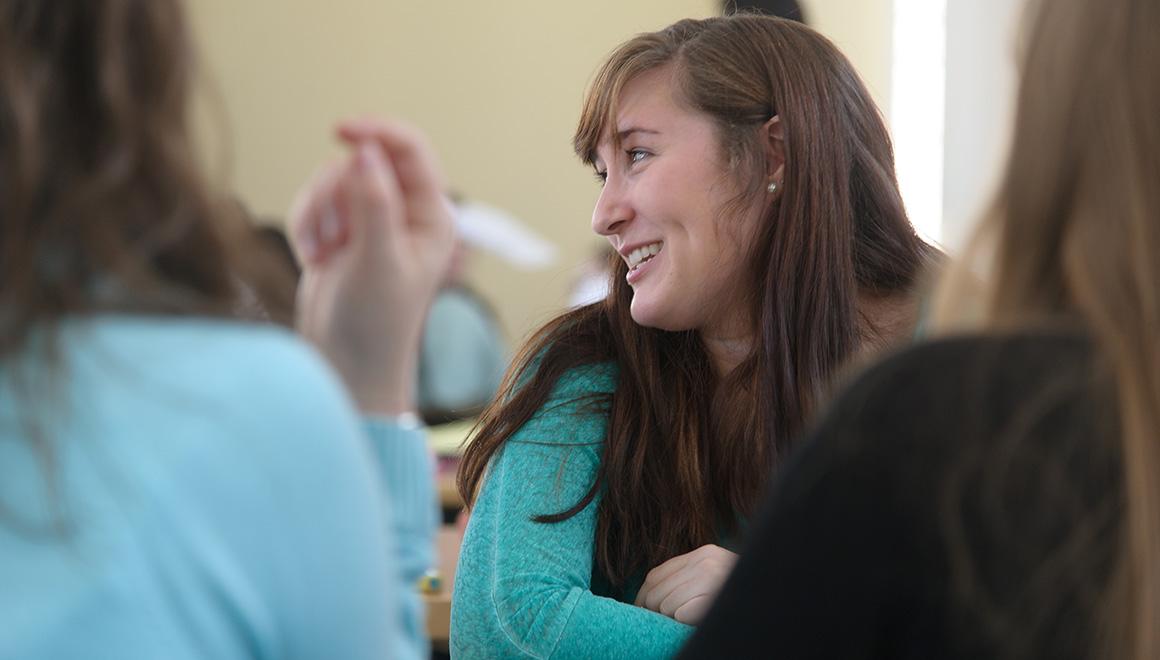
Students sitting in class

Jumpstart your social work career

You can earn your Master of Social Work in just 16 months (or 4 consecutive academic terms, including summer) through Simmons University’s accelerated Master of Social Work (MSW) program option.

This immersive, full-time MSW program option connects your passion for helping others with a clear professional purpose and prepares you for a career in clinical social work.

Simmons' accelerated MSW program is available in both on-campus or online formats. You’ll study social justice and multicultural perspectives while applying what you learn directly in practicum placements.

Why choose an accelerated MSW program?

The accelerated MSW program is ideal if you have work and/or volunteer experience in social work or other related fields, and have demonstrated strong academic performance.

 In this program option, you will:

  • Finish faster without cutting corners. Complete four consecutive terms in 16 months and earn a top-ranked MSW while benefiting from the depth, rigor, and academic distinction Simmons is known for.
  • Build real-world experience every term. Gain practicum experience each semester, so you constantly develop skills while moving quickly toward your degree.
  • Learn by doing. Apply classroom knowledge through hands-on internships working with individuals, groups, and agencies to strengthen your clinical and community-based practice.
  • Receive personalized practicum support. Partner with dedicated practicum faculty and a placement specialist who help you secure two practicum placements aligned with your academic and career goals.

What can you do with a Simmons MSW? 

As a social worker, you play a vital role in your community. You can pursue work in hospitals, veterans’ services, schools, community health centers, mental health clinics, adoption agencies, nursing homes, private practices, and addiction recovery settings.

With a Simmons MSW, you will have the knowledge, confidence, and experience to affect public policy and help enact widespread improvements in the communities you serve. You’ll provide essential services, such as counseling, crisis intervention, and access to crucial social resources.

The Bureau of Labor Statistics projects that employment of social workers will grow 6% from 2024 to 2034, making social work an in-demand profession.


The MSW degree requires 65 credit hours, consisting of 48 credit hours of classroom courses and 17 credit hours of practicum courses. Listed below is the MSW course sequence as of September 2022. On Ground course numbers have the prefix SW; online courses, SWO.

Specialized Year

SW404 Social Welfare Policy 3
SW414 Assessment and Diagnosis 3
SW424A Advanced Clinical Practice 3
SW424B Advanced Clinical Practice 3
SW447A Practicum Education Year II 4
SW447B Practicum Education Year II 4
SW509 Evaluation in Social Work Practice 3
Elective
Elective
Elective

Licensure and Certificate Programs

As an MSW student, you may choose to pursue a certificate program in which you will gain advanced skills in a specific area of interest through a structured sequence of courses.

MSW with MA Licensure in School Social Work (On Campus)

Students in the MSW program interested in practicing as a school social worker can elect to work towards the Massachusetts state license to be a School Social Worker/School Adjustment Counselor (SSW/SAC). The certification is required to work as a clinical social worker in many school settings in Massachusetts.

Requirements for the MSW with Licensure as a School Social Worker/School Adjustment Counselor include:

  • Sixty-two credits in the MSW program including SW 539A, SW in the Schools, SW 539B, SW in the Schools II and SW 595, Child and Adolescent Diagnosis, and one specialized social work elective.
  • Successful completion of the two SSW practicum; one placement must be in a school setting the other placement is encouraged to be in a setting serving children and families.
  • Completion and submission of required documentation.

Students planning to work toward the school social worker license should review the SSW/SAC student handbook, follow the program plan provided at registration, and attend the information sessions with the Certificate Coordinator. Practicum planning should be guided by licensure requirements. To be granted the license, candidates must complete all requirements mandated by the Massachusetts Department of Elementary and Secondary Education (DESE) (e.g., passing the Communication and Literacy tests of the Massachusetts Tests for Educator Licensure [MTEL]). Students are strongly encouraged to take the MTEL before completing the MSW program. Waiting to take it until after graduation might delay the ability to secure employment. 

MSW with Certificate in Public Policy (On Campus)

This certificate program is designed to give MSW students with an interest in macro/policy issues the opportunity to supplement their clinical education experience with a deeper knowledge of public policy. This certificate will position graduates to have more options in terms of career directions in social work, particularly around policymaking or policy advocacy, with an emphasis on building policy analysis and advocacy skills that will allow students to analyze and affect policies at local, state, and national levels. These courses will enhance students’ understanding of policy systems and theory, methods of policy analysis, and subject matter knowledge in two major policy arenas.

MSW with Certificate in Trauma Practice (On Campus and Online)

The Certificate in Trauma Practice will prepare graduates for practice with a variety of populations in multiple settings including: schools and universities, community mental health centers, immigrant and refugee centers, the legal justice and prison systems, inpatient and outpatient hospitalization programs, and psychotherapeutic settings with children, adults, couples, families and groups. Students complete all regular MSW program requirements, as well as SW 528A Child and Adolescent Trauma, SW 528B Lifespan of Trauma Treatment: Adults and Families, and two Trauma Practice certificate electives.

MSW with Certificate in Clinical Practice with Active Service Members, Veterans, and Families (On Campus and Online)

This certificate provides MSW students with a unique opportunity to develop the knowledge and skills necessary to engage in effective and culturally-sensitive clinical practice with service members, veterans, and their families. Students will learn about the systems and culture of the U.S. military; the sociocultural identity development of military personnel; the experiences, needs, and strengths of military individuals and families, with specific attention to minoritized groups; avenues of support for military personnel and their families; and specific assessment and intervention practices, with particular emphasis on PTSD and suicidality. This certificate prepares students to work with individuals and families at any stage of military involvement and in a variety of settings.

MSW with Certificate in Mental Health Practice (Online)

The Certificate in Mental Health Practice prepares graduates to work with people who have experience with serious mental health conditions, including those with concurrent health conditions. Students will learn to recognize and address the significant impacts of stigma, marginalization, and discrimination that impede the health, safety, access to resources, and quality of life for people with serious mental health conditions. In addition, they will become skilled in delivering evidence-based and best practice approaches for managing symptoms and achieving wellness and recovery. Students will exit the program with an understanding of the role of social worker as both a provider and advocate working in collaboration with interdisciplinary teams, families, and other supports and services.

MSW with Certificate in Public Health

This Simmons Certificate in Public Health provides the opportunity for Simmons’ MSW students to acquire specialized knowledge from the adjacent field of public health. The certificate helps students enrich their MSW education and training in a way that prepares them further for work in macro social work settings. With a focus on health equity, a Simmons Certificate in Public Health will equip MSW students with the analytical lens necessary to identify the population health consequences of social injustice, along with the associated approaches to address them through public health programming, policy, community organizing and advocacy. The certificate will also provide MSW students with foundational understandings of public health history, theory, and practice.

Elective Courses

MSW students who opt not to enroll in a certificate can still develop a focused skill set through their elective courses. Students interested in an area of focus can work with their Academic Advisors on elective selection. Examples of focus areas are:

  • Health and Aging
  • Child and Family Wellbeing
  • Substance Use and Misuse
  • Adult Mental Health
  • Trauma and Interpersonal Violence
  • Group Practice
  • Clinical Practice and Therapy Models

Course Sequencing / Prerequisites

  • Research, SW 441/SWO 441 must be completed prior to enrollment in Evaluation, SW 509/SWO 509.
  • Program Evaluation, SW 509/SWO 509 must be taken concurrently with SW 447A or SW 447B/SWO 447A or SWO 447B.
  • Dynamics of Racism and Oppression, SW 409/SWO 409 must be completed before commencing specialized year courses.
  • SW 403/SWO 403 must be completed before SW 404/SWO 404.
  • Practicum Education Year I, SW 446A or SWO 446L is concurrent with SW 421A or SWO 421A; SW 446B or SWO 446B is concurrent with SW 421B or SWO 421B.
  • Practicum Education Year II, SW 447A or SWO 447A is concurrent with SW 424A or SWO 424; SW 447B or SWO 447B is concurrent with SW 424B or SWO 425.
  • Students must stay in the same sections (day, time, and professor) for practice classes: SW 421A/SWO 421A and SW 421B/SWO 421B and SW 424A and SW 424B.

Practicum Placements

Students apply their academic knowledge through direct-practice internships with individuals, groups, families agencies, and larger systems. Practicum helps students develop a strong foundation of social work practice skills prior to graduation. The final semesters of practicum placement focus on advanced clinical skills. Practicum placements occur on weekdays (Monday-Friday) during regular business hours.

On Ground MSW practicum options 

  • Full-Time Students: Internships are three days (24 hours) per week from September to May for both years of the MSW Program.
  • Extended Program Students: Internships taken during the second and third years of the program are three days (24 hours) per week from September to May. Students can choose to do placements 16 hours per week for 11 months.
  • Advanced Standing Students: Advanced standing students complete one 2 semester (Fall, Spring) practicum. Placements are 24 hours each week.
  • 16-Month Students: Internships are in four consecutive semesters starting in the Spring Term. Each is 24 hours per week.

Online MSW practicum options

In the first term of practicum education students complete the Simulated Practicum Experience, a 14-week 3 credit course that constitutes the first term of the generalist placement. After successful completion of the course, students enter the three-term agency-based placement which comprises the final term of the generalist placement and both terms of the specialized placement. The core of the Simulated Practicum Experience is simulation training, an evidence-based teaching and learning pedagogy and an essential method for applying knowledge to practice. MSW program students are required to complete a minimum of 1104 hours of practicum in their agency-based placements. Regular attendance of three days a week (or 24 hours per week) in practicum is required of students during the three terms. Advanced Standing students attend 672 hours of practicum for two terms.

Students in each of the online options typically begin practicum work as follows:

  • Extended (8 terms): 4th term
  • Full-time (6 terms): 2nd term
  • Accelerated (4 terms): 1st term
  • Advanced Standing (3 terms): 2nd term
  • Advanced Standing (2 terms): 1st term

Employment as Practicum (all enrollment options)

In certain situations, the School and Practicum Education Department may permit students to use a paid social work position to fulfill the practicum education requirement for one practicum. In the On Ground program this arrangement is generally made for the foundation placement but can also occur during the advanced placement if faculty deems the site appropriate. In the Online program this could possibly be approved as the 3 term placement. Students who wish to use their place of paid employment as a practicum must complete an employment-based Practicum placement application. Each application will be carefully reviewed and decided upon within the framework of Council on Social Work Education (CSWE) and school standards and expectations. To be approved, the agency and student must agree to adhere to the criteria for such placements, which are listed in the Practicum Education Manual.


You will apply your academic knowledge through direct-practice practicum placements with individuals, groups, agencies, and larger systems. Before entering the MSW Program, you will meet with our practicum education faculty to assess interests, discuss learning goals, and arrange a plan. The first Generalist practicum provides a strong foundation of social work practice skills. 

As an accelerated MSW student, you will have two practicum placements: one during the spring and summer of the first year and an advanced clinical year placement in the fall and spring of the second year. You will meet with a practicum placement specialist to begin the placement selection process for both years.

Please also note that the alternative accelerated schedule, which includes a summer semester of practicum education, will somewhat limit the first year of practicum placement choices.

Employment as Practicum Placement

If you are currently employed by a human service agency, on occasion you may be permitted to do your practicum as a supervised "job placement" at your current agency. If you are interested in this option, you must apply to the practicum department. Only placements that meet the strict criteria — including the provision of a new LICSW supervisor and a new work assignment — are approved. Only one placement can be a job placement.

Learn more about Practicum Education.

Spotlight on MSW Students and Alums
Small flags displayed in the veterans lounge. Photo by Kate Smith.

A Holistic Approach to the Veteran Population

Tim Norton ’26MSW is completing his master of social work + clinical practice with active service members, veterans, and families certificate at Simmons. Norton shares how he brings his own experience as an Army officer and his training at Simmons to support this unique population.
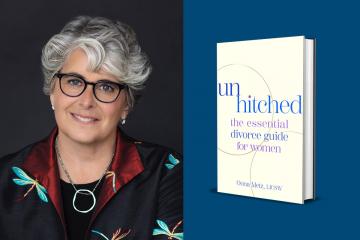

Side by side photo of Oona Metz ’93MSW and the book cover for her book "Unhitched"

Social Work Alumna Publishes Book on Divorce

Oona Metz ’93MSW is a therapist who leads therapy groups and supports women in transition. We spoke with her about her new book on navigating divorce and the essential training she received at Simmons.
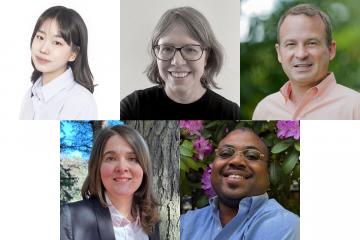

The 2025–26 Graduate Research Award Recipients

2025–26 Graduate Student Research Award Recipients

The Office of Research and Fellowships has announced the recipients of the 2025–2026 Graduate Student Research Award. This competitive, cross-disciplinary award provides up to $1,500 to five doctoral and master’s degree candidates to conduct research in the fields of mental health, social work, children’s literature, and archival preservation.

A colorful piece of art representing a profile of a face

Pioneering Trauma-Informed Care with Expressive Arts

Kapr Bangura is the program director for the Therapeutic After-School Program at the Home for Little Wanderers, the oldest child-welfare organization in the country, focused on serving children who have experienced violence, neglect, and other forms of trauma. In this leadership role, Bangura oversees a strengths-based afterschool program designed to address the therapeutic, educational, and recreational needs of youth ages 12 to 18 and their families.


A house cut out of wood with an etching of a family in the main part of the house

Family Support Through Care and Housing Support

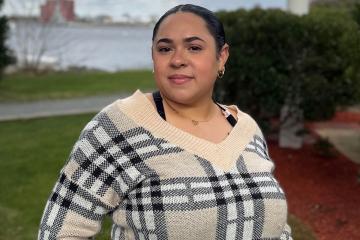
Deyanira Gomera ’24MSW is a school-based clinician at Housing Families, Inc., a nonprofit in Malden, Massachusetts, that offers a range of programs for individuals and families in need of stable housing. In this role, Gomera works in partnership with Everett and Peabody public schools to provide group therapy to children and teens who are living in shelters.


An empty grade school hallway with lockers along the walls

Finding Purpose in School-Based Social Work

Diana Pelaez ’24MSW is a clinical social worker for the Metropolitan Council for Educational Opportunity (METCO) — the largest voluntary school-integration program in the country.


Boston Children's Hospital Main Entrance

Alumna Delivers Trauma-Informed Care at Boston Children’s

Rachel Nyakako is a clinical social worker in the Children’s Hospital Primary Care Center (CHPCC) at Boston Children’s Hospital. She serves as a link for patients and families in need of mental and behavioral healthcare and resources.


A graphic illustration of people volunteering and helping others

Advocating for Others

Anne Villano ’22MSW says her decision to enroll in Simmons’ School of Social Work was influenced by two key factors that also shaped volunteer service she engaged in while earning her degree – and her path since graduating: life experience and an affinity for advocacy.


Highlights of Simmons MSW

1st

School of Clinical Social Work in the Country

The School of Social Work (SSW) is distinguished in many ways — with nationally acclaimed faculty, a strong emphasis on clinical practice, and our ideal Boston location among world-renowned teaching hospitals and research facilities.

School of Social Work

85%

First-time pass rate on ASWB licensing exam

Simmons University consistently surpasses national averages for first-time pass rates on the licensing exam. In 2025, 85% of campus and online students passed the ASWB Master’s Level Licensing Exam, which is 12% higher than the national average.

View recent licensing exam pass rates for MSW graduates.

50%

Secure Employment

Close to 50% of MSW students have a job lined up before graduation.

* results from the 2025 MSW student survey

82%

Rank Clinical Training as Excellent

82% of students agree that the clinical training quality at Simmons is "excellent."

* results from the 2025 MSW student survey

80%

Feel that Faculty are Invested

80% of students report that faculty are invested in their success.

* results from the 2025 MSW student survey

5K+

Community Partners

Our extensive practicum network, with over 5,000+ partner agencies nationwide, provides exceptional placements in hospitals, schools, and community mental health settings — including the strong, successful partnerships we’ve built in Boston.