

The Office of Research and Fellowships is pleased to announce the recipients of the 2025–2026 Graduate Student Research Award. This competitive, cross-disciplinary award provides up to $1,500 to five doctoral and master’s degree candidates to conduct research in the fields of mental health, social work, children’s literature, and archival preservation.
Congratulations to this year’s awardees!
Jeongyeon Choi (Master’s Candidate, Library and Information Science)
Research Project: “Exploring User Experience in Mental Health Applications for Depression”

Many individuals rely on mental health applications to manage symptoms of depression and seek emotional support. User reviews provide valuable insight into these experiences by capturing authentic feedback on usability, functionality, and effectiveness. However, most existing studies rely primarily on user ratings to measure user experience, which reflect overall sentiment but lack the ability to explain why users are satisfied or dissatisfied.
This project addresses that gap by asking: What factors most significantly shape user experience in mental health apps for depression, and how can these factors inform a more comprehensive app quality evaluation framework?
To answer this question, the study adopts a mixed-method design supervised by Dr. Shengang Wang, who provides methodological guidance and analytical feedback. The quantitative phase involves a literature review to codify existing evaluation dimensions. The quantitative phase applies Natural Language Processing (NLP) and topic modeling to publicly available, anonymized user reviews of depression-focused apps to uncover user-defined factors. Both results will be synthesized into a new framework for app quality evaluation.
This interdisciplinary research is situated at the intersection of mental health informatics, data science, and human-computer interaction. The findings will yield a data-driven model that developers, clinicians, and libraries curating digital health resources can apply to assess app quality more effectively.
Emily Remer (PhD Candidate, Library and Information Science)
Research Project: “A Phenomenological Study of the Higher-things Experience of Adults with Children's Picture Book Illustration”

This research seeks to understand the experience adults have with children’s picture book illustration as art, by inviting adults to experience picture book art at The Eric Carle Museum of Picture Book Art and the R. Michelson Galleries, both of which exhibit children’s picture book illustrations outside the form of the book.
Through phenomenological methods, and through a Higher-Things lens, this research will examine this experience for 10 to 12 individuals and attempt to discover what might contribute to the experience as being pleasurable or profound.
This study will address the gap of research on information behaviors within the Higher-things context within the Library and Information Science (LIS) discipline; begin to shift LIS research past the positivist, pragmatic, and problematized motivations of LIS investigations; and will help provide a balance to the utilitarian-heavy corpus of LIS research.
Eric Schade (PhD Candidate, Social Work)
Research Project: “Biopsychosocial Assessment of a Gratitude- and Compassion-based Intervention for Young Adult Social Anxiety”

Young adults often feel isolated, particularly when they have social anxiety. This dissertation project tests a brief, low-cost gratitude and compassion program to see if it reduces disconnection and social anxiety, and how it changes information processing in the brain. P
Participants ages 18–29 will be randomized to the intervention or a control for four weeks, with surveys at baseline, post, and follow-up. A subset will complete electroencephalography (EEG) monitoring to track changes to a standard measure, the late positive potential (LPP). Outcomes include social anxiety, fear of negative evaluation, loneliness, and LPP amplitude. Findings aim to inform practical, scalable support for campus and community care.
Laura Stevens (PhD Candidate, Social Work)
Research Project: “Self-Compassion for Health Communities Intervention for Social Workers and Mental Health Counselors”
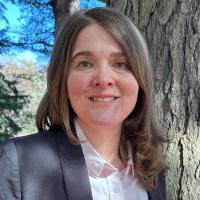
Social workers and mental health professionals experience high rates of burnout and depression. Preliminary research shows that mindfulness-based and self-compassion based interventions among healthcare professionals and SW may reduce burnout, depression, perceived stress, secondary traumatic stress (STS), however existing interventions include sessions that are typically 2 to 2.5 hours and 8 to 10 weeks long.
Due to time constraints among SW and MHC, shorter interventions that include fewer total sessions may be more feasible. Self-Compassion for Health Care Committees (SCHC) is a 6-week intervention for health care professionals that has demonstrated effectiveness in reducing burnout, secondary traumatic stress (STS), and depression among health care providers (HCP).
A condensed one-day 6-hour version of SCHC demonstrated at three months post-intervention there was an increase in self-compassion, and reduced burnout and stress, but not secondary traumatic stress (STS) and depression. This lends itself to the question of whether a brief, adapted SCHC intervention consisting of 3 sessions over 3 weeks could be helpful in reducing burnout, stress, STS, and depression among SW and MHC who work with children who have experienced trauma. The purpose of this study is to examine if a brief, 3 session self-compassion intervention improves burnout, STS, perceived stress, self-compassion, rumination, mindfulness and depression among SW and MHC who work with children who have experienced trauma.
Rai Terry (Master’s Candidate, Library and Information Science)
Research Project: “Auntie Penny's Tapes”

Auntie Penny’s Tapes is a community-centered archival research project dedicated to preserving the generational memory held on analog videotape, a format too often overlooked by archival institutions. Rooted in both technical practice and critical inquiry, the project examines how domestic recordings, often overlooked, intimate, and materially fragile, carry affective, historical, and cultural significance.
With analog videotape rapidly degrading and playback devices disappearing, this work addresses an increasingly urgent preservation gap. With support from the Graduate Student Research Fund, the project will expand its digitization capabilities to include Hi8 formats, implement upgraded capture hardware, and strengthen standardized workflows for quality control and metadata creation. These enhancements support both the practical rescue of at-risk materials and the research aim of understanding how degradation, signal instability, and other material conditions shape the archival futures of personal media.
Auntie Penny’s Tapes operates at the intersection of community service and scholarship. The project offers free digitization for local residents, builds descriptive metadata grounded in care, context, and consent, and studies the narratives people attach to their home movies. It also develops public humanities strategies that respect privacy while illuminating the broader cultural value of everyday recordings.
Ultimately, the project investigates how small, personal archives can counter institutional absences and reimagine who is documented, preserved, and remembered. By centering the emotional and material realities of analog videotape, Auntie Penny’s Tapes contributes to a more expansive and equitable understanding of audiovisual heritage.