
Tim Norton ’26MSW is completing his master of social work + clinical practice with active service members, veterans, and families certificate at Simmons. Norton shares how he brings his own experience as an Army officer and his training at Simmons to support this population.
Before starting his master of social work at Simmons, Tim Norton ’26MSW had previous careers as an active duty Army officer, followed by years in a corporate position.
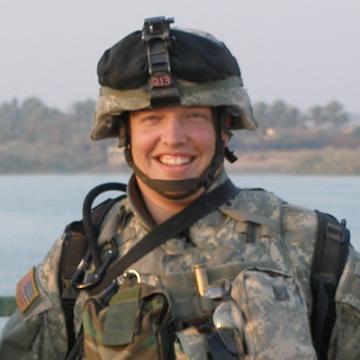
“I needed to find a new purpose,” says Norton. “What I was doing [in corporate America] wasn’t giving me that motivation. I was thinking about what gave me a sense of purpose and mission. Throughout my post-military career, I felt great about helping veterans, whether they were folks I had served with or interacting with people at the VA [Veterans Affairs]. I wanted to get into the clinical space to provide counseling for veterans, and that led me to social work.”
Norton was intrigued by Simmons’ long history in social work education and its clinically-focused program that emphasizes the importance of trauma-informed care.
“These are principles I’m aligned with,” says Norton, who noted that the MSW certificate program focused on clinical practice with active service members, veterans, and families was “pretty rare. Having a program focused on the population I wanted to work with — it all seemed to come together.” Simmons’ vast connections with external organizations for clinical placements were important to Norton, especially those offering opportunities to serve veteran populations.
The personal approach helped distinguish Simmons, too. Once he was accepted into the program, “Simmons was the only institution to reach out directly to congratulate me over the phone,” he recalls. “I was also connected with alumnae/i working with veterans. I talked to them about their experience at Simmons and how they applied their education to the field.”
Norton also praises Stephen Pusateri, assistant director of military and veteran services, who offers guidance through financial aid and benefits for veterans. “Steve provides top-notch, seamless service,” says Norton. “The one time I had an issue [with financial aid], it was immediately resolved. Steve is super supportive of veterans in the program.”
A Trauma-Informed Approach
While the program likely attracts students with ties to the military, via their own service or family members in service, the program offers important perspectives, whether you have extensive military experience or none at all.
“While there are things that I understand [about service], I’ve learned more about processing trauma, and service members who struggle with their identity in civilian life,” says Norton. “The program has helped me understand how to communicate in a way that is respectful and culturally attuned to this group.”
Norton came to the program with the goal of understanding the broader culture of those in military service, across different racial and geographic backgrounds.
“Everybody’s story is different; my story as a veteran is different from another’s story,” says Norton. “The program has helped me to create that therapeutic space so a veteran can feel seen, not judged, and reduce the stigma in dealing with mental health. We want to value their strengths, honor their service, and help them in the healing process. The program has made me more culturally humble, creating a space for those individuals to share their stories with me, and helping guide them to their goals.”
Now in his final semester of the certificate program, Norton is enthusiastic about the experience. “It has furthered my experience and understanding of military culture and how different systems impact active duty service members and their families. We look at mental health issues, and look holistically at different systems that can put stressors on veterans’ lives, given issues like PTSD and injuries. Learning different evidence-based practices to serve this population has been helpful.”
One particularly impactful course for Norton was “Understanding Suicide: Prevention, Intervention, and Postvention” (SW 464).
“The veteran population has a historically high suicide rate,” Norton notes. “In the course, we learned about what might grab somebody in that direction toward self-harm and suicide, as well as practices to address these behaviors, as well as safety planning. It helped me be able to identify risk to someone potentially hurting themselves, and how to handle it. I can’t recommend this course enough for anybody getting into the social work space, even if you don’t work with veterans.”
Hands-On Learning Through Clinical Placements
Norton has had two clinical placements thus far. In the first, he worked with veterans experiencing homelessness, chronic mental illness, and substance use challenges.
“I learned about the systems and support available for homeless veterans, but also how marginalized they are,” says Norton. “I was able to establish a rapport with individuals who are isolated and disconnected, and unable to navigate complex systems. I was able to offer trauma-informed support, often to individuals on the street, and work with them to get housed and get them the care they needed.”
The second placement, in a primary care office that provided behavioral health services for veterans, offered a multidisciplinary environment. “We treated veterans struggling with depression, PTSD, and multiple traumas, working alongside psychologists, doctors, and nurses. It showed me how a lot of health care systems can come together [for a comprehensive approach] to care.”
These experiences have enriched his approach to social work. “I’ve received a lot of great support from Simmons and the clinical sites, and I’ve been able to apply the skills I’ve learned in class in a clinical setting,” says Norton. “As a veteran, the certificate program has helped deepen my understanding of the military experience, [allowing me to] look at different aspects, through different lenses.”