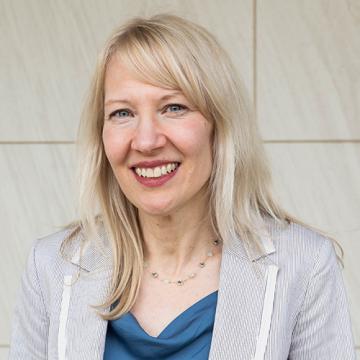
Dr. Lynne Bowker is the 2026 Allen Smith Visiting Scholar. In her keynote lecture “Scholarly Communication in a Multilingual World: Challenges and Possibilities” she will examine how the dominance of English in scholarly publishing creates inequities for researchers and limits knowledge exchange.
In recent decades, English has become established as the key language for research and publishing, but a central-language model creates inequities among researchers and has implications for research and society more broadly. A return to multilingual scholarly communication practices can address some of these limitations, but it introduces other challenges. For instance, if we all publish in our own language, how can we discover and engage with each other’s work? Translation technologies, such as neural machine translation (e.g. Google Translate) or generative AI tools based on large language models (e.g. ChatGPT) can help, but they are not a panacea.
After examining the limitations of a central-language model for scholarly communication, this presentation explores the pitfalls and potential of automated translation tools (including examples of good practice), and considers complementary approaches that could support the establishment of a thriving multilingual scholarly communication ecosystem, including research assessment reform, terminology planning, plain language initiatives, multilingual metadata, peer review training, and considered policies on AI tool use.
In addition to the keynote lecture, Dr. Bowker will be moderating a panel discussion entitled: Ethics and Large Language Models: Multidisciplinary Perspectives on March 26.
About Dr. Bowker
Lynne Bowker is Full Professor and Canada Research Chair in Translation, Technologies and Society at Université Laval in Quebec. From 2002 to 2024, she was a professor at the University of Ottawa with a cross-appointment between the School of Information Studies and the School of Translation and Interpretation. Holding a PhD in Language Engineering, she conducts research at the intersection of language and technology, and in 2020, she was elected to the Royal Society of Canada (Canada’s national academy) in recognition of her contributions to this field. Professor Bowker’s research has been regularly funded by the Social Sciences and Humanities Research Council of Canada, including two recent projects. The ongoing “Machine Translation Literacy Project” focuses on how users outside the language industries employ automatic translation tools, such as neural machine translation (e.g. Google Translate) and generative AI tools based on large language models (e.g. ChatGPT). The recently completed project “Linguistic Privilege and Marginalization in Scholarly Communication” focused more specifically on how translation technologies are employed in the context of scholarly communication. She has published widely on these and related topics, including Machine Translation and Global Research (Emerald, 2019), De-mystifying Translation (Routledge, 2023), and Plain Language for Translators (Routledge, 2026). She is the Editor-in-Chief of the journal Digital Translation (John Benjamins Publishing Co.) and serves on the editorial boards of several other journals, including ARIST: Annual Review of Information Science and Technology (Wiley). She is a strong advocate for open scholarship, and she received the 2023 Open Scholarship Award from the University of Ottawa Library. In addition to engaging in scholarly activities, Professor Bowker is also a certified French-English translator recognized by the professional translators’ associations in Ontario and Quebec in Canada.
Dr. Bowker will spend the week of March 23-27, 2026 at Simmons SLIS, sharing her research around translation technologies, such as machine translation and generative AI, and highlighting complementary strategies to support a more inclusive and sustainable multilingual scholarly communication ecosystem.