
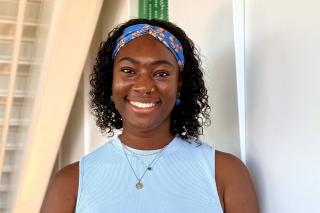
What are the most impactful things you have done during your graduate program at Simmons?
Two of the most impactful experiences have been my clinical placements and my participation in the Harm Reduction Training (HaRT) Scholars Program.
Through my placements at Rising Hope Counseling and Fenway Health, I provided psychotherapy to adults navigating anxiety, depression, substance use, burnout, life transitions, interpersonal stressors, and gender identity exploration. These placements allowed me to develop my clinical skills while learning how to support clients through trauma-informed and culturally responsive approaches.
At Rising Hope, some clients engaged in ongoing therapy with weekly or biweekly sessions, while others came for occasional or drop-in support. In addition to clinical work, I contributed to projects such as developing resource guides, supporting outreach initiatives, and helping organize workshops.
I am currently an intern on the outpatient psychotherapy team at Fenway Health, where I provide individual and group therapy for adults. Fenway Health is a federally qualified health center that operates within a medical model, which has allowed me to gain experience with interdisciplinary care, structured intake processes, and clinical documentation within an integrated health care system. This placement has been particularly meaningful because Fenway serves communities at the intersection of many of the issues I care deeply about, including LGBTQ+ and BIPOC health, mental health, and substance use.
At Fenway Health, I also co-facilitated an Exploring Gender Identity therapy group with another intern. From outreach and recruitment to facilitating sessions and completing the group (therapy) process, the experience gave me a deeper understanding of the power of group therapy and the importance of creating spaces where people can explore identity, build self-compassion, and feel less alone.
I was also selected as a HaRT Scholar, a specialized program designed to train social workers in harm reduction practices. Through this program, I deepened my understanding and knowledge of overdose prevention, substance use treatment, and the structural barriers many people face when accessing care. The program reinforced my commitment to approaching substance use through a compassionate, evidence-based framework that prioritizes dignity, safety, and access to care.
Tell us about your research and area of specialization.
My area of specialization focuses on behavioral health, substance use, and harm reduction. Before attending Simmons, I worked in clinical research in addiction medicine, where I studied substance use prevention and treatment among a wide range of populations — from adolescents and their caregivers to adults living with opioid use disorder.
Through that work, I saw firsthand how social factors such as stigma, racism, and access to health care shape people’s experiences with substance use and recovery. My interest in harm reduction comes from the belief that everyone deserves compassionate, nonjudgmental care regardless of who they are or where they are in their relationship with substances.
Harm reduction focuses on reducing the risks associated with substance use while keeping people safe and connected to care. Rather than expecting a single path to recovery, it recognizes that people move through change in different ways. My goal as a social worker is to help create systems of care that are compassionate, equitable, and grounded in respect for people’s lived experiences.
What was your favorite Simmons course and why?
One of my favorite courses at Simmons was “Substance Use and Social Work” (SWO 422), taught by faculty member Eric LeFevre. The course explored substance use within a social justice framework, examining how structural factors such as racism, stigma, and policy shape people’s experiences with substance use and access to care.
From my previous work in addiction medicine research, I saw how substance use impacts individuals and communities. This course deepened my understanding of the role social workers can play in supporting clients through evidence-based approaches such as Motivational Interviewing and harm reduction. I appreciated that the course emphasized compassion, self-reflection, and the importance of meeting people where they are.
Who was your most influential Simmons professor or mentor and why?
It is difficult to choose just one professor because the faculty at Simmons is deeply invested in supporting students’ personal and professional growth. One particularly influential professor for me was Professor Daren Graves, whose course on racism and dynamics of oppression was the first class I took in the MSW program. Professor Graves created a classroom environment that encouraged open dialogue, curiosity, and critical reflection. His teaching challenged us to think deeply about the systems we work within as social workers while approaching difficult conversations with empathy and humility.
How has Simmons prepared you for your intended profession?
The Simmons MSW program prepared me for my future career by emphasizing culturally responsive, anti-racist, and anti-oppressive social work practice. Throughout the program, we were encouraged to reflect on how our identities and lived experiences influence our work with clients.
Through coursework, field education, and supervision, I gained practical clinical skills while also developing a deeper understanding of social policy, theory, and systems of care. Simmons also emphasized the importance of sustainability in social work practice, reminding us that caring for ourselves is essential to supporting the well-being of others.
How did you find your community at Simmons?
I found my community through my classmates. Our cohort included people from many different professional and personal backgrounds, and learning from one another was one of the most valuable parts of the program.
The friendships I built during graduate school became an important source of support throughout the program. We shared resources, encouraged each other during challenging moments, and celebrated milestones together. These relationships reminded me that social work is deeply collaborative work and that the community we build with one another can sustain us throughout our careers.
In your experience, what was the best thing about attending graduate school in Boston?
Boston is home to numerous hospitals, community organizations, research institutions, and nonprofits, creating countless opportunities for internships, research, and professional development. Being in Boston allowed me to gain experience in diverse clinical settings while connecting with professionals across many areas of behavioral health and social work.
What is your favorite Simmons memory?
Meeting lifelong friends and colleagues through the program. I took several years off after completing my undergraduate degree before beginning graduate school and I was fairly new to Boston when I started.
Early in the program, I met one of my closest friends in my clinical practice class. Throughout our time at Simmons, we supported each other through coursework, internships, and the many ups and downs of graduate school. These kinds of friendships made the experience incredibly meaningful, and I truly cannot imagine going through the program without them.
What advice do you have for current and incoming Simmons students?
Take full advantage of the opportunities available to you. Simmons and the Boston area offer a wealth of experiences — from internships and research opportunities to fellowships, grants, and professional development programs.
Many of the opportunities I participated in — including the HaRT Scholars Program, the Council on Social Work Education (CSWE)’s Minority Fellowship Program (MFP), the Boston Area Health Education Center Scholars Program, and the Simmons Center for Information Literacy student grant — were shared through emails sent by Simmons faculty and staff. While the number of emails can feel overwhelming at first, they often contain incredible opportunities that can shape your graduate experience.
I would also encourage students to build relationships with their classmates and professors. Your peers will likely become your colleagues in the future, and the connections you build can be invaluable throughout your career.