
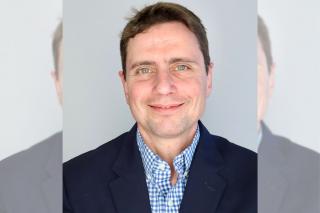
Tell us about your research and area of specialization.
My research looks at how we can make library learning more creative and engaging for students. Many people think of library instruction as just a 50-minute session on how to find books, something we call the “one-shot” model. In my doctoral research, I explored how librarians actually use the limitations of that short timeframe as a spark for innovation.
I developed a theory called “Creative Practice as Constrained Adaptation.” Essentially, I found that because librarians are often forced to work within strict time limits and without formal teacher training, they’ve had to invent “creative hacks” to reach students. My work shows that when we move beyond rote, skills-based instruction and embrace “messy” inquiry, we transform the library from a traditional information repository into a dynamic “learning lab.” As a current dean of libraries and learning at the University of Southern Maine, I use this research to advocate for the institutional support and pedagogical agency our librarians need to be the powerful educators our students deserve.
What was your favorite Simmons course and why?
“Culturally Intelligent Leadership” (MSMG 443) with Professor Emerita Lynda Moore was pivotal, as it pushed me significantly out of my comfort zone. Through a rigorous analysis of case studies, we explored the nuances of pluralism and the structural requirements for building truly inclusive work environments. It provided a pragmatic roadmap for how to move beyond surface-level diversity toward a deep sense of belonging within an organization.
I was able to directly link the management principles from this course to the inclusionary work needed in academic libraries today. It has informed how I approach strategic planning — specifically in how we diversify the field and embed these values into our core programming. Furthermore, this course helped me understand that “creative pedagogy” is inextricably linked to cultural intelligence; to teach creatively is to be responsive to the diverse lived experiences of our students and to advocate for the institutional capital necessary to support that work.
Who was your most influential Simmons professor/mentor and why?
Professor Laura Saunders, who served as my advisor and dissertation chair. To be mentored by one of the premier experts in information literacy was transformative. Her foundational research in reference services, information literacy, and intellectual freedom provided the essential framework for my doctoral work, but it was her mentorship through the research process itself that I value most.
I owe a debt of gratitude to Dr. Saunders for her extraordinary patience and grace. She provided the steady guidance and intellectual “heavy lifting” necessary to navigate a complex, unconventional research path. I especially appreciated her willingness to support me in leaning into the “stickiness” of creativity and qualitative inquiry — a difficult route that has since defined my academic identity.
Beyond the dissertation, her commitment to the intersection of social justice and information authority has deeply shaped my approach as an administrator. Her mentorship taught me that supporting the labor of librarians is essential to fostering an inclusive learning environment, a principle that guides my leadership today.
How has Simmons prepared you for your intended profession?
Simmons provided me with a world-class foundation that balanced deep academic theory with pragmatic, cross-disciplinary requirements. My journey was defined by a unique mix of core library and information science (LIS) research (with Professors Michèle Cloonan and Rong Tang) and essential “outside” perspectives in statistics, qualitative research, and social work.
This interdisciplinary approach, which included taking courses in management and teaching alongside digital humanities and makerspaces, was instrumental in shaping my identity as an administrator. It pushed me to look beyond the library’s walls to see how information science can drive economic and workforce development.
The program’s cutting-edge requirements and exposure to the Allen Smith Lecture Series kept me at the forefront of the field’s most urgent conversations. This environment encouraged me to think of the library not just as a building, but as a “nexus” for a state’s creative economy. This mindset directly informed my current work as dean of libraries and learning, specifically in the conceptualization of our Public Humanities Lab (PHL) and the Center for Student Innovation.
These initiatives are the fruition of my Simmons training: they integrate advanced digital tools like Geographic Information System (GIS) mapping and data visualization with humanistic storytelling to prepare “T-shaped” graduates who are ready for a 21st-century information economy.
Ultimately, Simmons prepared me to be a pedagogical partner rather than just a service provider. By supporting my unconventional research into the “stickiness” of creativity, my mentors gave me the confidence to lead institutional shifts, moving the library from a traditional repository to a dynamic “learning lab” that serves both the university and the broader community.
What advice do you have for current and incoming Simmons students?
My primary advice is to stay relentlessly curious and embrace the “stickiness” of your interests, even when they lead you down unconventional paths. Simmons is a unique environment where the faculty don’t just tolerate exploration, they actively champion it. I encourage students to take full advantage of the interdisciplinary connections available; some of my most formative insights came from stepping outside the library stacks and into the School of Management or exploring social work and statistics.
Beyond the classroom, stay engaged with the broader professional and cultural community. I made it a point to visit the Museum of Fine Arts, Boston, and the Isabella Stewart Gardner Museum every year, and those experiences constantly refreshed my creative perspective. Thanks to the encouragement of professors like Laura Saunders, I was able to present at numerous conferences during my doctoral studies, which was vital for building my professional network and confidence.
Don’t be afraid to treat your time at Simmons as a “learning lab” for your own growth. Attend the lectures, join the organizations, and say “yes” to the research opportunities that push you out of your comfort zone. The field of information science is evolving rapidly, especially with the rise of AI, and the students who succeed are those who remain open to new ideas and have the courage to advocate for their own pedagogical agency.