
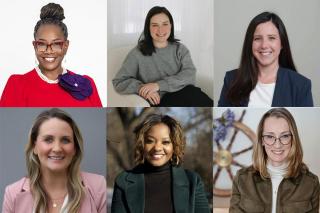
Simmons University’s School of Nursing (SON) welcomed six new faculty members this academic year. We asked our new faculty members what they want their students to know about nursing today, and what experience changed how they view their profession.
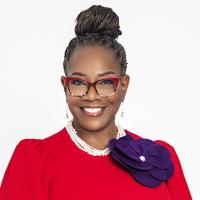
Dr. Janelle Baker is a teaching professor in graduate nursing, as well as a board-certified nurse practitioner with more than 30 years of experience. A highly accomplished adult-gerontology primary care and psychiatric-mental health nurse practitioner and advocate, Dr. Baker focuses on providing access to quality care for the most vulnerable populations. In December 2025, she was selected for the 2026 cohort of the Gloria J. McNeal Leadership and Public Policy Mentoring Fellowship.
“Nursing is much more and much bigger than passing pills and the bedside,” says Baker. “When I floated to the oncology floor, I realized that how we listen to patients can be just as healing as the medications we administer or prescribe. This is the art and science of nursing.”

Charlene Canada, associate professor of practice for pre-licensure nursing and assistant director for simulation, has a passion for educating new nurses coming into the profession. Her areas of interest include clinical practice, continuing education, patient advocacy, and healthcare policy.
Reflecting on her nursing education, Canada says, “I wish I had understood how important confidence and a professional voice truly are. As students, we focus on mastering skills and avoiding mistakes, but developing clinical judgment, asking thoughtful questions, and advocating for patients are just as essential. Nursing today requires critical thinking, adaptability, and the courage to speak up for ourselves and our patients.”
While Canada encourages her students to embrace lifelong learning, she also offers reassurance that “it’s okay not to have everything figured out. Growth comes through experience, reflection, and mentorship. The goal isn’t perfection, it’s progress.”
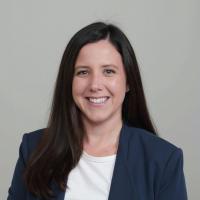
Jamie Dreher, assistant professor of practice, pre-licensure nursing, and assistant director of pre-licensure clinical, is also a practicing pediatric nurse. Her professional interests include clinical education, faculty and instructor collaboration, and evidence-based practice in clinical learning environments.
“What I wish I had known as a student is how deeply nursing would shape me as a person,” says Dreher. “Yes, you take on the challenge of learning technical skills and developing clinical judgment, but what stays with you are the moments when a patient and their family allow you into one of the most vulnerable times of their lives. Being present in moments of fear, uncertainty, and hope, and having the opportunity to offer competence, calm, and compassion is incredibly meaningful. Few professions ask you to think critically while also showing up so fully as a human being. That combination is what makes nursing more than just a career.”
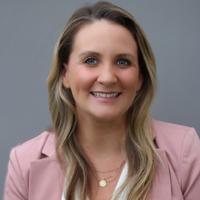
Caroline Laverty ’13, associate professor of practice, pre-licensure nursing, has a professional background in community health, preventive care, and wellness. She brings a deep commitment to holistic and proactive healthcare into both her teaching and clinical perspectives.
“My hope for nursing students is that they learn to care for themselves as intentionally as they care for others,” says Laverty. “Developing self-care habits, asking questions, and seeking support are key to thriving in this profession.”
In addition, Laverty emphasizes the value of communication. “A patient once shared with me that they felt unheard, despite trying to understand their symptoms and search for the root cause of what they were experiencing … That experience shaped how I see the nursing profession. It reminded me that nursing is not only about clinical expertise, but about advocacy, presence, and human connection. Sometimes the most powerful thing we can do is truly listen with an open mind and help someone feel seen and heard. Nurses are often the ones who speak up, look at the whole picture, question assumptions, and advocate for better paths forward. Nursing is holistic and multifaceted, and our willingness to listen, think deeply, and work alongside patients can make all the difference.”
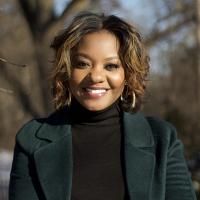
Ashley Parks, a tenure-track instructor in graduate nursing, is a nurse practitioner, educator, and researcher with nearly two decades of experience in graduate nursing education, clinical practice, and research. Her work centers on health equity, culturally responsive care, and the intersection of pharmacology, health policy, and social determinants of health.
Parks also sees the power in leaning into your own identity when connecting with patients.
“Working in primary care and at a federally qualified health center showed me the value and difference that my identity as a Black woman made,” she says. “My motto was to provide quality care for people who look like me. The disparities that I learned about in nursing school and experienced growing up became more real in my adult professional life. When I saw improvements in patients’ diabetes, for example, and the love and gratitude they showed me for the care I provided, I realized that the difference I am making starts with a genuine introduction of myself and a deep desire to improve their health outcomes. It is experiences like these that have guided my work, my research, and my life in ways that I could have never imagined.”
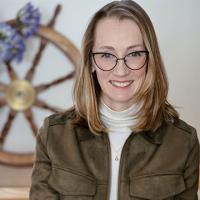
Dr. Samara Pottier-Taccetta, associate professor of practice in pre-licensure nursing, is a nurse educator, clinician, and healthcare innovator with more than 15 years of experience. She is the founder of Whole Life Midwife, a private practice and educational platform dedicated to advancing women’s health across the lifespan through evidence-based hormone care, lifestyle medicine, and patient education.
“Nursing is not just a role,” says Dr. Pottier-Taccetta, “It’s a platform for leadership, advocacy, innovation, and systems-level impact. At the bedside, in the classroom, in policy spaces, and in the community, nurses shape how care is delivered, how voices are heard, and how equity is built into healthcare systems. I want students to know that their clinical skills matter deeply — but so does their perspective. Their ability to ask questions, challenge assumptions, communicate with courage, and lead with compassion will define their influence just as much as their technical expertise.”