
Master of Public Health

Become a changemaker for health equity
The Simmons University online Master of Public Health (MPH) program prepares professionals and emerging leaders to address the systemic forces shaping health outcomes.
Designed for individuals committed to health equity and social justice, the program equips you with the tools to move from frontline work to system-level impact. Through applied coursework, hands-on experiences, and a mentored practicum, you will develop research, policy, leadership, and advocacy skills needed to improve health outcomes in organizations and communities.
Whether you are early in your career or looking to deepen your expertise, the Simmons MPH helps you translate experience into meaningful change.
Why study public health at Simmons?
Simmons’ MPH program is built for people engaged in healthcare, nonprofit, research, advocacy, or community-based work through professional positions, internships, service programs, or volunteer roles. Our MPH program is for you if you are ready to:
- Engage in policy change to affect broader determinants of health
- Move from direct service or entry-level roles to systems change
- Design and implement health equity initiatives in your organization or community
- Build leadership experience while earning your MPH
- Earn an MPH without stepping away from your career
You are welcome to apply regardless of your academic or professional background. Many students balance full-time work, family, and community commitments while completing the program.
Flexible learning for working professionals
- Traditional Program: Complete your MPH in about 24 months.
- Accelerated Program: Finish in 15 months with an intensive schedule
- Non-degree option: Take up to two MPH courses as a non-degree student to develop or enhance your knowledge and skills.
- Evening virtual classes are scheduled in Eastern Time
- Live, interactive online sessions that facilitate collaboration and discussion
- Two short in-person immersion experiences
- Coursework designed to connect directly to professional practice
The MPH program at Simmons offers three starts per year: Fall (September), Spring (January), and Summer (May). A comprehensive list of application deadlines can be found on our How to Apply page.
Those who apply by the priority deadline are eligible to receive an application fee waiver. Interested applicants should contact [email protected] to request a fee waiver.
Scholarships
Merit scholarships up to $15,000 are available to students pursuing their MPH. No additional application is necessary.
Applicants who are part of an organization in a partnership with Simmons are not eligible for these scholarships but do benefit from cost savings.
What will you learn in Simmons’ MPH program?
In the Simmons MPH program, you will develop tools to influence decision-making and drive measurable outcomes that improve population health through applied coursework in policy, research, and systems change.
Twice during the program, you and fellow students come together for in-person short courses called immersions. One is in Boston, and one is a destination immersion. These provide opportunities to learn directly from community and public health leaders who are addressing some of the most pressing public health challenges. You’ll join your peers for experiences that provide:
- An in-depth view of how social injustice shapes community health
- Face-to-face mentorship and training with faculty
- Opportunities to build relationships with fellow students and alumnae/i
- Networking opportunities with public health and health equity leaders
At the center of the program is the Health Equity Change Project, a mentored, self-designed practicum you will implement in your workplace or community. You’ll graduate with:
- A completed portfolio showcasing the work of your health equity initiative
- Real-world project design, implementation, and leadership experience
- Skills in policy analysis, advocacy strategy, and program implementation
- Professional connections to build your network for career advancement
Accredited by the Council on Education for Public Health
The Master of Public Health program at Simmons University is accredited by the Council on Education for Public Health (CEPH).
The Master of Public Health Program of Public Health at Simmons University is undergoing a review by the Council on Education for Public Health (CEPH) for reaccreditation. Part of this process includes the provision of a third-party comment period, which allows anyone, including students, alumni, faculty, staff, community and practice partners, and members of the public, to share relevant information about the program directly with CEPH.
If you have any information about the program you would like to share with CEPH to inform their review, send your comments to [email protected] by September 5, 2026.
92%
Simmons MPH Graduates Employed One Year After Graduation
*As reported to CEPH for the 2024 Annual Report for Simmons University
What will your experience be?


“The Simmons program and like-minded community helped me gain the skills and drive necessary to incorporate a health equity lens into my day-to-day work.”
- Natalya Martins, MPH ‘20, Chief Operating Officer at Massachusetts Health Quality Partners
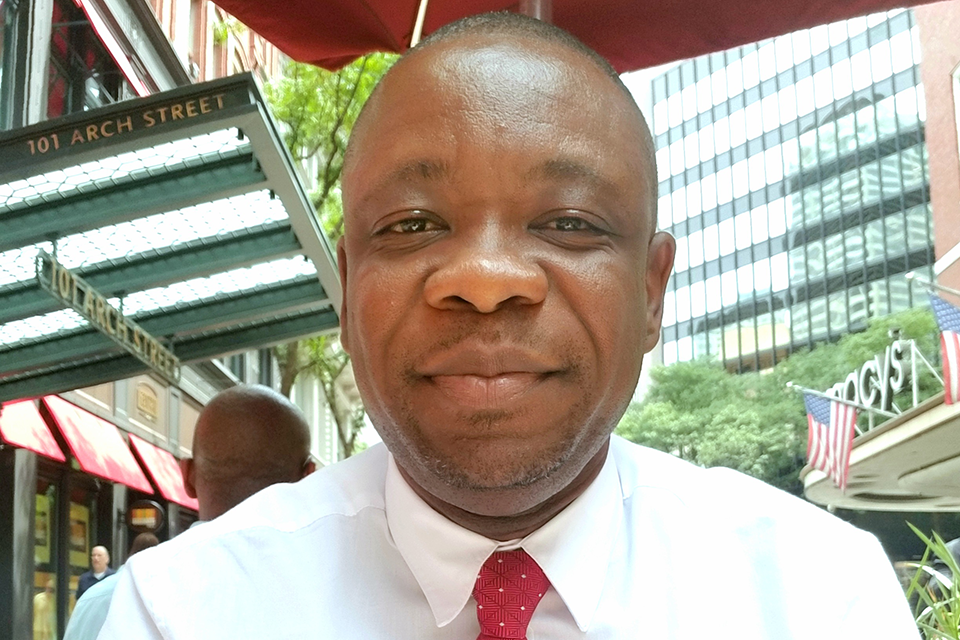
“I have developed community-based care programs, analyzed health disparities statistics, and worked with communities at the organizational level to influence anti-racism structural changes. These opportunities and avenues would not have been made available to me had it not been for this program.”
- Lydje Lahens, MPH '19 Senior Research Administrator, Broad Institute of MIT and Harvard
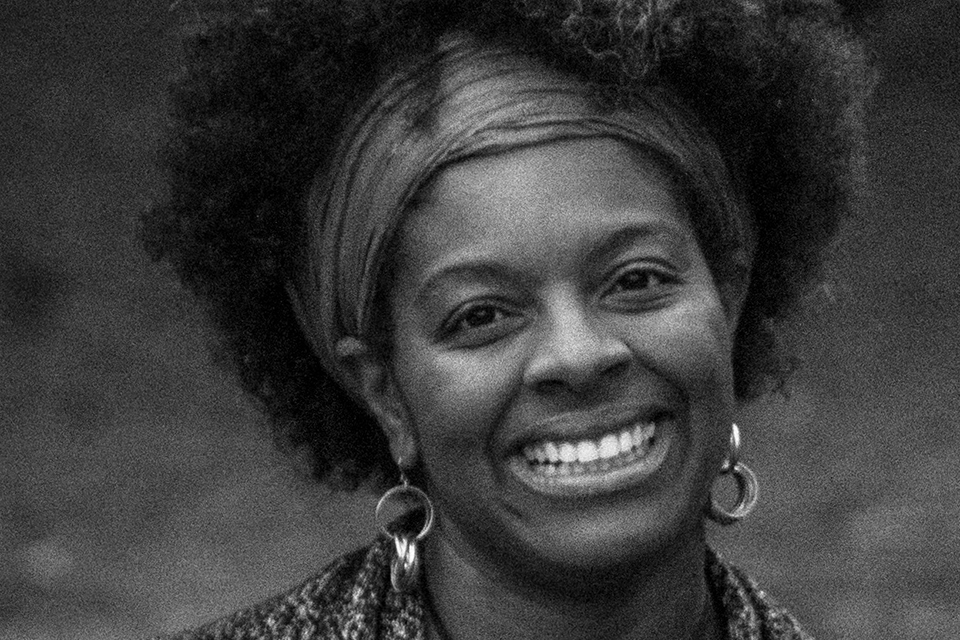
“My Health Equity Change Project (HECP) was to develop a Service-Learning curriculum for first-year medical students that focused on the structural issues impacting population health. My project has become the next phase in my career. I am currently implementing the curriculum that was designed during my HECP.”
- Dr. Resa Caivano, MPH ‘20, physician and faculty at Kaiser Permanente Bernard J. Tyson School of Medicine

“My Simmons MPH gave me the foundational knowledge needed to approach public health work. From the very beginning of the MPH program, we were taught to always look upstream, see everything with a health equity lens and to be outcomes driven. With every task or responsibility in my current role, I am always analyzing how I am addressing a social determinant of health, or uplifting parts of the community that have historically been under-resourced or marginalized.”
- Stephanie Gomez, MPH ‘23, Manager of Community Partnerships, Boston Children’s Hospital
The 42-credit curriculum is broken down as follows:
- 36 Core Credits
- 3 Elective Credits
- 3 Immersion Credits
The typical course sequence is as follows for traditional MPH students completing the program in two years:
Term 3
| MHEO435 | Community-Based Research for Health Equity | 3 |
| MHEO440 | Health Policy Analysis & Change | 3 |
Term 4
| MHEO430 | Immersion: Racism, Health & Equity | 1 |
| MHEO465 | Health Advocacy, Community Organizing, & Innovation | 3 |
| MHEO490 | Public Health Project Planning I & II | 3 |
| Elective |
The typical course sequence is as follows for students completing the Accelerated MPH degree in fifteen months:
Term 1
| MHEO410 | Health Equity & Social Justice | 3 |
| MHEO415 | Epidemiology | 3 |
| MHEO435 | Community-Based Research for Health Equity | 3 |
Term 2
| MHEO420 | Socio-Structural Determinants of Health | 3 |
| MHEO425 | Biostatistics | 3 |
| MHEO465 | Health Advocacy, Community Organizing, & Innovation | 3 |
| MHEO490 | Public Health Project Planning I & II | 3 |
Traditional
- Designed for aspiring and rising public health professionals
- Complete in as few as 24 months
- Complete 42 credits across six terms
- Permitted to work during the program — most students work full time but scale back or find some flexibility with their employer when they begin their Health Equity Change Project
Accelerated
- Designed for highly motivated students who can dedicate themselves to their degree on a full-time basis
- Complete in as few as 15 months
- Complete 42 credits across four terms
- Not permitted to work/be employed during the program
Non-degree
Those interested in learning more about public health, health equity, or developing skills to enhance their work and practice are eligible to take up to two courses in the Master of Public Health program as a non-degree student.
Courses taken as non-degree students count towards program requirements if a non-degree student decides to enroll in the program as a degree-seeking student. Please note that enrolling in a course as a non-degree student does not guarantee admission into the MPH program as a degree-seeking student.
The following courses are available to non-degree students:
- MHEO 410 Health Equity and Social Justice
- MHEO 420 Socio-structural Determinants of Health
- MHEO 440 Health Policy Analysis and Change
- MHEO 450 Environmental Health and Justice
- MHEO 470 Global Health and Political Economy
- MHEO 485 GIS and Spacial Analysis
- MHEO 486 Strategic Communications for Health Equity
- MHEO 488 Health Law and Human Rights in Practice
Courses may not be offered each term. For information about courses being offered and enrolling in a graduate Public Health course as a non-degree student, contact the Office of Graduate Admission at [email protected].
Immersions are in-person, short courses that give students the opportunity to practically apply what they learn in class. Students are required to attend two immersions: one on the Simmons campus in Boston and one destination immersion for a total of three credits during their time in the program. Students are responsible for all immersion travel, program, and accommodation expenses.
- Boston: This three-day immersion will take place in Boston, Massachusetts, home of Simmons University. Throughout the immersion course, students learn about historical and contemporary manifestations of racism as it is reflected across local systems and institutions. Students will learn from local organizers, public health professionals, and advocates about local and national efforts of racial justice as core endeavors toward health equity. The Boston immersion is typically offered during the Fall semester.
- Destination: This experiential course invites students to the US Southeast (Tennessee) or the US Southwest (Arizona). Students will have the opportunity to learn from local community partners, examine innovative community-driven models of development and social justice, and engage in a hands-on service project. Through these experiences, students will appreciate both the challenges and promise of these unique geopolitical landscapes. Travel immersions are typically offered in January, prior to the Spring semester.
In the final two terms of the program, students complete a Health Equity Change Project, which combines the practice and culminating experiences required of MPH degree recipients into a single opportunity. During the Health Equity Change Project, students will:
- Choose a local health inequity that is meaningful to them to be the focus of their project.
- Analyze this inequity to understand the issues surrounding it and points of intervention.
- Identify and partner with an organization that addresses health inequity in their community.
- Design a project proposal that will address that health inequity.
- Implement and evaluate their project in close collaboration with their host organization and community partners.
- Develop a final portfolio featuring their applied public health skill set and attainment of program competencies.
The MPH program at Simmons provides practical, hands-on opportunities to engage with local communities to examine and address public health issues that matter to them. Students can also shape many of these opportunities around their passions, career goals, and interest areas.
- During the Health Advocacy, Community Organizing, and Innovation course, students partner with their selected organization and participate in community organizing and/or advocacy through a 20-hour service-learning experience.
- As part of the Community-Based Participatory Research for Health Equity class, students work with community liaisons and leaders of their choice to assess local barriers to health.
- Immersion courses in Boston and the US Southwest or US Southeast provide the opportunity for students to learn from local organizers, public health professionals, and advocates about local and national efforts for racial and social justice as core endeavors toward health equity.
- Students develop, evaluate, and implement their Health Equity Change Project in close collaboration with their host organization and community partners.
Our admission committee takes a holistic approach when evaluating each candidate for the program, valuing prior community experience and a passion for improving health equity. To apply to the MPH program at Simmons, students should first review the application requirements and deadlines.
This program is only available to applicants who are US citizens or permanent residents due to the requirement that all students participate in two in-person courses in the United States.
Spotlight on Public Health Students and Alums

MPH Alum Receives APHA Learning Bridge Award
Bridges to Health, Inc., a community-based organization founded by Lydje Lahens ’19MPH, has been selected for the American Public Health Association’s (APHA) Building Bridges Learning – Community Learning Bridge Award.

How a Nurse’s Perspective Impacts Public Health
As a nurse and a transgender woman, Masters in Public Health graduate Ellie Spoering ’25MPH offers vital education about gender-affirming care to fellow nurses.

MPH Immersion Explores Health and Justice in Immigrant Communities
Students in the Department of Public Health recently attended an event at Simmons, “Beyond Barriers: Advocating for Health and Justice with Immigrant Communities," where guest speakers shared their work to support and advocate for immigrant communities.
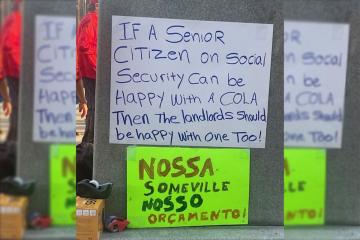
Public Health Alum Addresses Housing Insecurity
Sam Geheran ’25MPH is passionate about the right to safe housing. We spoke with them about their research on unhoused populations, their interest in public health, and the inspiring atmosphere at Simmons.
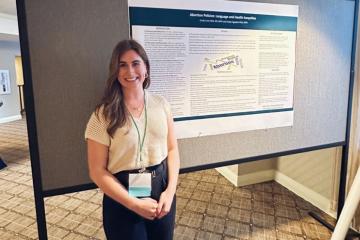
Changes in Reproductive Health Laws Impact Perinatal Hospice Care
Emily (Orlando) Cane ’23MPH was interviewed by Hospice News about how changes in reproductive health laws have impacted perinatal hospice care.

With HERE4Justice, MPH Students Work to Advance Social Justice
For many students in the Department of Public Health, activism begins at Simmons. In 2018, MPH students established HERE4Justice, a student-run organization that works to advance health equity, racial equity, and social justice. "Students started this collective because they saw...
Our Faculty
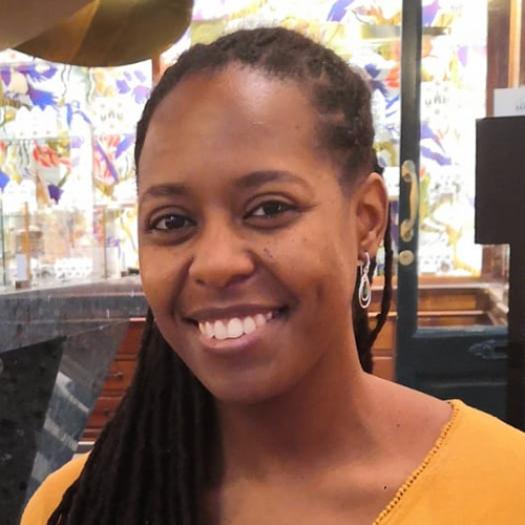
Leigh Haynes
Associate Professor of Practice and Director of the Master of Public Health Program
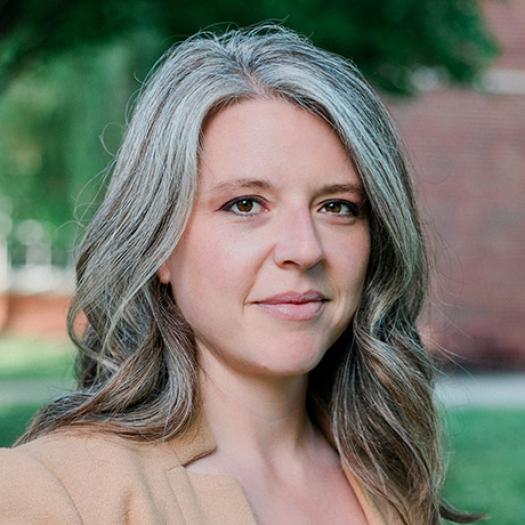
Kristen Brewer
Assistant Professor

Dolores Wolongevicz
Associate Professor of Practice and Director of the Health Professions Education Program
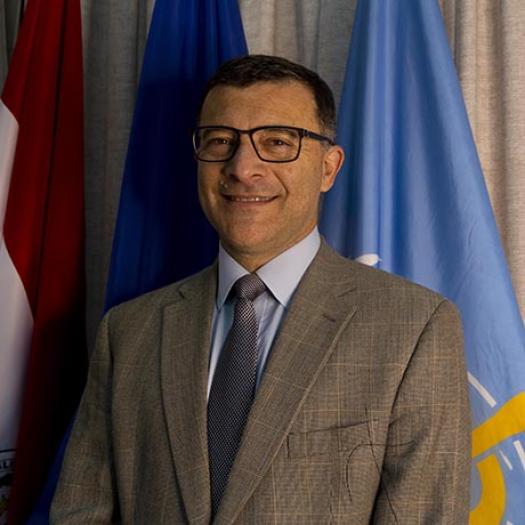
Marcelo Korc
Adjunct Faculty

Sarah Perry
Adjunct Faculty
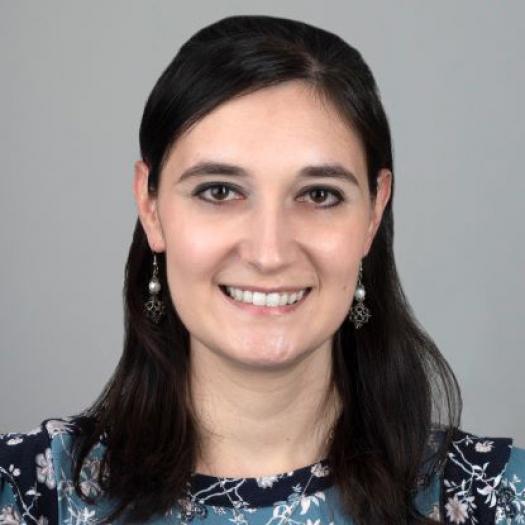
Anna Modest
Adjunct Faculty