
Behavior Analysis (MS or EdS)

Launch your career in Behavior Analysis
Simmons University's Master of Science in Behavior Analysis campus-based program is perfect if you’re looking to enter the field of Applied Behavior Analysis (ABA), become a Board Certified Behavior Analyst® (BCBA®), and make a meaningful difference in the lives of others.
BCBAs® are known for their work in improving quality of life, communication, and learning outcomes, particularly for neurodivergent individuals. However, BCBAs® may also practice in other areas, including animal training, organizational behavior management, higher education, and behavioral medicine, among others.
A legacy of excellence in behavior analytic education
Our campus-based Master of Science in Behavior Analysis program is internationally known for excellence in behavior analytic education. We’ve been a leader in the field since 1998. Our program is one of the few master’s programs worldwide that is accredited by the Association for Behavior Analysis International Accreditation Board, and was the first master's program in New England to receive accreditation from the the Association for Behavior Analysis International Accreditation Board.
Our on-campus program meets the Behavior Analyst Certification Board® degree and coursework requirements to apply for the BCBA® exam under Pathway 1 (accredited programs). Our curriculum offers exceptional preparation for the BCBA® exam — with on-campus students achieving a first-attempt pass rate of 67% in 2024, as compared to the national average of 54%. Our program outcome data are reported annually.
Why study Behavior Analysis on campus at Simmons?
The need for behavior analysts has continued to increase across the nation since 2010. The US demand from 2023–24 for employees credentialed as a BCBA® or BCBA-D® rose 58%, with Massachusetts ranking second nationwide among states with the highest demand. If you choose to relocate to pursue graduate studies at Simmons, you’ll benefit from a robust job market in Massachusetts, which has many providers of behavior analytic services.
Our rigorous curriculum focuses on the science of behavior, behavior analytic research methods, and broad applications across a wide range of clinical and research areas. Throughout the degree program, you’ll become scientist-practitioners, developing an in-depth understanding of the basic principles of behavior, assessment and behavior change methodologies, evidence-based instruction, and professional and research ethics. Our campus-based program prepares you for a variety of research, clinical, and leadership roles post-graduation.
Within the Practicum coursework, you’ll develop, conduct, and analyze outcomes of a thesis research project under the supervision of the Thesis Committee. On campus, you may utilize the behavior analysis research lab spaces and equipment to conduct your thesis research.
Our lab spaces support underrepresented areas of behavior analytic research, including physical activity, health and wellness, public speaking, and skill development for college students, among other areas of research. Throughout the thesis and practicum experience, you’ll develop a deeper understanding of behavior analytic research and the scientific method, research ethics and processes, and dissemination of research outcomes.
As a student in our program, you’ll learn from faculty with expertise ranging from the experimental analysis of behavior and verbal behavior to behavioral medicine and organizational behavior management. You’ll graduate ready to pursue a career in a variety of established and emerging areas of behavior analysis.
Simmons University also offers a PhD in Behavior Analysis and an online Master of Science in Behavior Analysis.
What will you learn in our Behavior Analysis master's program?
Simmons’ Behavior Analysis Master’s program prepares you for the BCBA® exam, and for leadership roles in the implementation, evaluation, and administration of applied behavior analytic principles and methods. Our rigorous curriculum focuses on the science of behavior, behavior analytic research, and the application of behavior analytic principles across broad domains, populations, research lines, and clinical practice.
Throughout the campus-based Master of Science in Behavior Analysis degree program, you will examine the concepts and methods of behavior analysis within the following areas:
- Basic principles of behavior
- Functional assessment and analysis
- Professional and research ethics
- Behavior change methodologies and evidence-based instruction
- Verbal behavior
- Experimental analysis of behavior
- Experimental research design
- Supervision
What can you do with a Behavior Analysis degree?
Upon completing the Simmons campus-based Master of Science in Behavior Analysis program and earning BCBA® certification, many of our graduates advance their careers by pursuing supervisory, consultative, and leadership roles in the field. However, with practice and research opportunities in both experimental and applied settings, you may go on to open a clinical practice, focus your career on a specialized area of practice, or continue to conduct research.
The Practicum coursework and thesis research requirement in the campus-based program equip you with the research experience needed to pursue a doctoral degree post-graduation. You may choose to continue your studies at the doctoral level to further advance your knowledge, disseminate behavior analytic research, or pursue opportunities to teach in higher education.
Details about our Behavior Analysis program
Simmons University’s Behavior Analysis campus-based master’s program can be completed as a Master of Science (MS) or Educational Specialist (EdS) degree, and prepares you to sit for the BCBA® exam. Our Behavior Analysis degree program is completed part-time, with evening classes that offer you flexibility for working in the field.
To earn either the MS or EdS degree, you must complete 40 credits and a thesis research project, which is completed during Practicum courses. To prepare for Practicum, you must begin working by the end of the first semester; we provide support to help you find an appropriate worksite.
Department of Behavior Analysis Mission Statement
- To make the philosophy, theory, and science of behavior analysis explicable and accessible to individuals in an optimal position to effect meaningful educational, social, and behavioral changes.
- To generate and publish innovative research by fusing behavior analysis with relevant findings from other scientific disciplines.
- To include, whenever possible, students as authors on presentations and publications.
- To demonstrate how behavior analysis can influence the breadth and depth of issues centered on the human condition.
- To prepare students to pass the Behavior Analysis Certification Board’s examination to become a Board Certified Behavior Analyst.
The Master of Science Degree in Behavior Analysis in the campus-based program is accredited by the Association for Behavior Analysis International Accreditation Board.
The degree and coursework meet the requirements for eligibility to take the Board Certified Behavior Analyst® examination under Pathway 1 (accredited program). Applicants will need to meet additional eligibility requirements and demonstrate they reside in an authorized country before they can be deemed eligible to take the examination.
Spotlight on Behavior Analysis Students and Alums
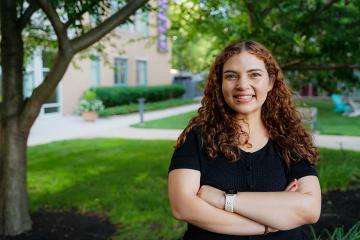
Alumna Supports Children with Behavior Analysis
Behavioral analysis alumna Gerali Mateo Peña ’26MS is passionate about working with children and individuals with disabilities. We spoke with her about her research and the rigorous training received at Simmons.

Behavior Analysis Student Helps Children Reach Milestones
Josie Re ’26MS, a student in the Online Master of Behavior Analysis, shares what led her to the field, and her experience in an online classroom.

Double Shark in Behavior Analysis Examines Microaggressions
Amy Maladore ’16MS ’25PhD earned her master’s and PhD in behavior analysis from Simmons, and her research explores the use of behavior analytic concepts to increase recognition of racist behavior. We spoke to Maladore about what brought her to study behavior analysis at Simmons.

Alumna Brings Behavior Analysis Insights to Education
Megan Breault ’13MS ’25PhD is a graduate of the Simmons University Master of Science in Behavior Analysis and Phd in Behavior Analysis. Breault presented her dissertation research at the Contemporary Developments in Behavior Analysis Virtual Conference, hosted by Simmons’ Department of Behavior Analysis in January 2026.
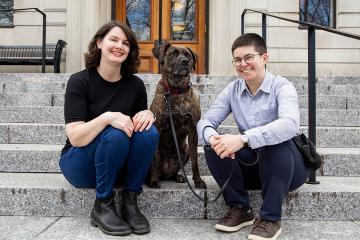
Alums Use Behavior Analysis to Bring Joy to Dogs and Their Families
As co-founders and co-owners of The Dog Behavior Institute, Ran Courant-Morgan and Dr. Stephanie Keesey-Phelan have found an innovative application for their behavior analysis specialization. We spoke with them about the mission of the Institute, the intrinsic rewards of their profession, and why they chose Simmons.

Leading Humans and Bull Terriers: Terri Bright ’08MS, ’13PhD Founds MSPCA-Angell Behavior Department
Before coming to Simmons, Bright had a private practice as a dog trainer and realized she wanted to learn more about animal behavior. With support from professors, Bright made the connection that "for pets and humans, the same principles apply."
Our Faculty

Gretchen Dittrich
Associate Professor, Chair of the Behavior Analysis Department, and Director of the Master's Program

Ronald Allen
Professor of Practice and Director of the Doctoral Program for Behavior Analysis

Judah Axe
Adjunct Faculty
Emily Perry
Assistant Professor of Practice and Curriculum and Data Manager

Laura Hanratty
Associate Professor of Practice and Practicum Director