
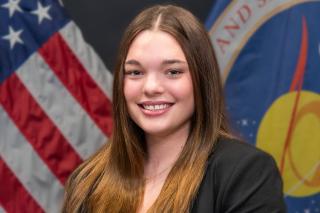
Data science and Artificial Intelligence (AI) are everywhere. What does it mean to major in these areas as an undergraduate? We spoke with a professor and graduate of Simmons’ Bachelor of Science in Data Science and AI to learn what the degree entails and how it prepares students for a rapidly growing field.
Professor Nanette Veilleux uses an analogy to describe the Bachelor of Science in Data Science and AI.
“All college students are taught how to use new AI tools. Our students are taught how to develop AI tools,” says Veilleux. “These include, but are certainly not limited to, Large Language models [LLM] and other generative AI. These days, this can range from predictive statistical analysis to writing or customizing an LLM. More importantly, our students will understand how these models work, their capabilities and limitations, and what their impact will be.”
Because of AI’s growing role in data science, Simmons recently renamed the “Data Science and Analytics” major to “Data Science and AI.”
Discovering a Passion for Data Science
Simmons’ data science degree has already opened exciting pathways for students, including opportunities for space research at NASA.
Tessa Volpe ’26 — a lifelong athlete and self-described “math nerd” — transferred from a predominantly male military academy, where she first discovered computer science as a program of study. At Simmons, she built on her aptitude for math and computers to discover a passion for data science.
“At Simmons, I focused on data science, the more mathematics and database side of computer science,” she says. “I tried different things but kept returning to math and data, and I was intent on setting up a financially secure future. The idea of pursuing the male-dominated field of data science in a women-centered institution was a great opportunity that I didn’t want to pass up!”
Volpe’s interest in data and computer science is tied to her love of mathematics, she says. “I like data-informed decision-making. Having the justification and rationale, and proof that you’ve found the best decision to make.”
As part of experiential learning at Simmons, Volpe used her data science skills to investigate health trends, such as why women of a certain age lose bone density.
“Being able to make a decision with data to back it up is my favorite thing about data science. It goes back to math, which always has an answer,” she says.
She cites “Data Structures” (CS 232CD), taught by Associate Professor and Chair of Computer, Data & Mathematical Sciences Amber Stubbs, as a pivotal learning experience.
“‘Data Structures’ was a fundamental class where I learned the basics of coding. Professor Stubbs is a great instructor and has been a great resource outside of coursework as well,” she says.
The Capstone course for data science students, “Machine Learning” (CS 346), taught by Professor Nanette Veilleux, allowed Volpe to use data from NASA’s Transiting Exoplanet Survey Satellite (TESS) for her project.
“We could do whatever we wanted as long as it used machine learning or an AI algorithm,” says Volpe. “It gave everyone the chance to pursue what we were excited about, which was a great element of the class.”
Hands-on Opportunities at NASA
Volpe used the opportunity to explore her interest in space.
“There’s a ton of data available from TESS. It classifies an exoplanet by measuring the brightness of light,” she says. “I used that data to train an algorithm to determine whether a celestial body was a star or exoplanet. That hands-on experience was vital.”
That class project inspired her to apply for a summer internship at NASA’s Information Management Platform for Data Analytics and Aggregation (IMPALA).
“At NASA, they care about your technical ability, and that you care about the mission. I was able to talk about how satellites work and share my interest in space,” she says.
While the internship wasn’t directly related to TESS, it prepared her for her experience at NASA, she says. “IMPALA is an information management platform for analytics. We were looking at the crew’s health data every day. We were able to use that data to create a dashboard, with visualizations for the epidemiology team to track different trends, to make data-informed decisions.”
This spring, Volpe struggled to choose from multiple employment opportunities. Luckily, Professor Stubbs offered much-needed guidance, she says. “I met with her often about how the real world works. She’s so knowledgeable about the computer science and industry side. Everything she says is helpful.”
After graduating earlier this year, Volpe began another internship at NASA’s Lyndon B. Johnson Space Center in Houston, Texas, where she works with a team in the NASA Tournament Lab.
“I work with a team in the Center of Excellence and Collaborative Innovation.” The team was responsible for the zero-gravity indicator for the Artemis mission, the Moon Mascot: NASA Artemis II ZGI Design Challenge.
“It was an open-source project that invited community members to submit a design for the indicator to encourage community involvement,” she says.
The winning design, Rise, was created by NASA’s Thermal Blanket Lab and accompanied the Artemis II launch on April 1, 2026.
“I’m working on the customer relationship management platform, evaluating data, transitioning it, updating the records, and now doing a large-scale data audit, as well as updating the way it’s stored and offering suggestions for improvement. It’s a temporary position, but data-centered, which is what I want to do.”
Volpe’s goal is to continue contributing to the growing field of data science.
“Data tells a story, and I can analyze the data to help companies make better decisions. I want to be part of solving a problem,” she says.
In addition to her satellite data project, Volpe pursued projects related to her other interests during her studies at Simmons.
“I’m interested in sports analytics, using data of recruits to find the best player, based on their training data,” she says. “When you watch a sports broadcast, there is so much data — speed, stats — it’s a great intersection of my interests.”
Volpe looks forward to watching the Boston Fleet (Professional Women’s Hockey League) play at the Agganis Arena in the fall.
Volpe approaches the use of Artificial Intelligence (AI) in her work with caution.
“I try not to use it too much as I really value human creativity and developing my own critical thinking skills,” she says. “Coming out of college, I avoided AI because I wanted to work through problems on my own and build skills myself. That being said, I know AI is becoming more and more common in the industry, so it can be important to understand how it can be leveraged ethically and accurately without relying on it.”
Data Science and AI: A Degree for ‘Exploration’
“Data science and AI are everywhere. It’s all over sports, healthcare, and so many other industries. I realized that I could study this and apply it to any field,” Volpe says.
She encourages students to go in with an open mind and try all that Simmons has to offer.
“At Simmons, you’ll learn how to leverage AI ethically, you’ll learn how AI works, and how to build it,” she says. “Simmons is a smaller university, so you can take a variety of courses, not just the computer science ones. You can try economics, or do an interdisciplinary project. Don’t pigeonhole yourself. This program, and the field, enables exploration.”
So far at NASA, Volpe has worked with many women in the STEM fields.
“The team I’m working for now is very open and innovative, and mostly women, from various backgrounds,” she says. “Having the experience working with women in STEM at Simmons was such an advantage. I’m surrounded by women! We’ve all worked hard to get here, and we’ve probably been told at least twice that we don’t belong. But at Simmons I was able to learn among other women passionate about the same things, to explore those skills without pushback.”
The Simmons experience was transformative.
“When you are surrounded by people who make you feel like you belong, it’s such a great way to learn. You can be creative and open to different things. I’m so glad I ended up at Simmons — it’s a complete 180 from my previous institution — and I couldn’t be more grateful.”
For Professor Veilleux, the goal is to prepare students for the changing technology field.
“Data Science is about analyzing and using data to predict unseen data,’ Veilleux says. “Computer Science is about writing applications and using LLMs to write applications. We are prepping our students to use LLMs as tools, like everyone else should be.”
Learn more on the Ask Simmons blog: What is a degree in data science and AI?