
In the days since Dolly Parton's passing, much has been written and said about the extraordinary legacy she leaves behind. She will be remembered for her iconic music, larger-than-life personality, and a legendary career that has influenced generations. What might not be quite as well known is her remarkable philanthropic legacy.
From giving away more than 300 million books to children around the world through her Imagination Library to investing in a COVID vaccine, providing scholarship funding to students, and donating to communities in need, her life offers a powerful reminder that philanthropy is about more than giving. It is about deciding what we want to make possible.
Women have more opportunity to shape the future than perhaps ever before. According to McKinsey & Company, women in the United States are expected to control $34 trillion in financial assets by 2030 – three times the amount they had at the start of the decade.
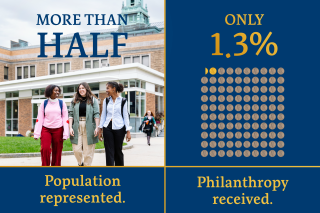
These figures are especially relevant when we consider how philanthropic resources are distributed today. Women and girls make up more than half of Massachusetts' population and contribute significantly to our workplaces, families, and communities. Yet just 1.3% of charitable giving in the Commonwealth supports nonprofits focused on women and girls, far less than the already dismal 1.9% nationally. Put another way: more than half the state’s population is the focus of little more than one penny of every charitable dollar.
For those of us who lead institutions centered on the advancement of women and girls, that disparity represents more than unmet need. It becomes unrealized potential.
Investments in women and girls have a multiplier effect. Education, mentorship, and economic opportunity not only change individual trajectories, they strengthen and transform the workplaces, organizations, and communities these individuals contribute to.
We see that impact from different vantage points in our own work. At the Women's Foundation of Massachusetts, investing in women and girls means supporting organizations that expand economic opportunity, leadership, and education.
At Simmons University, it means educating and preparing students who bring their knowledge, expertise, and everyday leadership into our communities —as nurses, librarians, social workers, scientists, educators, entrepreneurs, and leaders across countless fields.
Our work is different, but it is grounded in a shared understanding: potential is everywhere, but opportunity is not. Closing that gap, of course, requires investment, as organizations cannot fulfill their missions without financial resources. But philanthropy is more than the money we donate.
Each of us has something we can contribute. We can give our time by volunteering, mentoring, or serving. We can offer our talent by putting our expertise to work for a cause that is important to us; use our testimony to bring attention to a challenge or opportunity; activate our ties by making an introduction or opening a door; and contribute our treasure through financial support.
For those with greater financial capacity, that also means making deliberate choices about what they want their giving to accomplish. We often measure our impact by the careers we build, the milestones we reach, and the institutions we lead. As Dolly Parton shows, our legacy is also measured by what we share with others.
Time, talent, testimony, ties, and treasure. Each is a form of philanthropy, and each is a form of leadership. And each gives us an opportunity to invest in the people and causes we believe can shape a better future.
The philanthropic gap highlights where significantly more investment is needed. But it also points to what is possible. Foundations, corporations, and individual donors have a role to play, and all of us have choices about where to invest what we have. Together, we can close the gap, expand opportunity for women and girls, and create a legacy measured not only by what we accomplish, but by what we make possible.