
Interview is edited for length and clarity.
What drew you to studying communications, specifically journalism?
I've loved writing ever since I was a child. Any class where I could write was so freeing for me. I joined my high school newspaper, and that's when I discovered my love for journalism. A year after joining, I became the editor-in-chief, and I had so much fun with it.
I knew from then on what I wanted to do. When I first started at Simmons, I was actually on the public relations track, which I did enjoy, but I knew it wasn't quite the right fit. I ended up taking a few journalism classes and immediately knew that was the path I wanted to go down.
Why did you choose to study at Simmons?
The class sizes. I grew up going to some pretty large schools down in the South, and felt like it was hard to get to know people super well. It was also hard to get to know my teacher and stand out to get mentorship or guidance. I felt like Simmons was a good place to find that mentorship and community.
I remember the Communications Department being very welcoming at Simmons orientation day, Accepted Students Day, and one of the campus tours that I did. They were very lovely and warm. It was funny because speaking of that warm community, all of my closest friends were in the Communications Department, or had similar majors, like literature. I'm still friends with them today.
What is your current role?
I work for the Christian Science Monitor, whose newsroom is based in Boston. We have a global reach. My official title is associate multimedia producer, but I find myself doing a lot more than just multimedia projects.
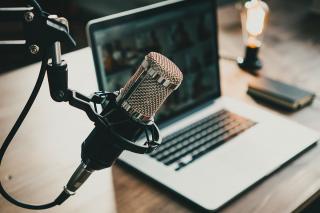
My tasks can change pretty rapidly depending on what a story needs. For instance, the basics of my job include running our daily podcast and assisting interns. Then, we've got our “Why We Wrote This” podcast, which delves behind the scenes of what our reporters are working on and stories that have just been published.
One of the podcast episodes covers one of our photo editors, who talks about what it's like to be a photo editor traveling abroad covering war, famine, and other news stories. I also work on the daily newsletter and write book reviews and features. It's a pretty mixed bag, but I really enjoy it.
Did you have any internships? What was that like?
I had two internships. One was at MuckRock in Cambridge, a nonprofit that helps people set up accounts to file Freedom of Information Act requests very easily through its software. When I was a senior, I interned at GBH News. While at GBH, I worked on the Higher Ed desk, and unfortunately, COVID-19 cut it short.
I liked them both, even though they were so different. MuckRock gave me plenty of experience filing Freedom of Information Act and other data-related requests, which is a valuable skill to have as a journalist. I also gained print and text-based writing skills.
At GBH, even though I was remote the rest of my internship due to COVID-19, I learned how to structure an audio story, which could be anywhere from one to two minutes long. There is only so much time to share information, which requires strategic decision-making.
Did you have a favorite course at Simmons? Why?
One that stands out in my mind was “Radio Operations” with Professor Erica Moura. When I was in high school, the podcast Serial had just come out, and it blew my mind. I was obsessed with it, and that's when podcasts were really getting started.
I had always been interested in podcasts, and there was never an opportunity to do something like that in high school. When Professor Moura joined Simmons and started teaching “Radio Operations,” I knew I had to take the class. That was my first experience with audio software and having a chance to be live on the air and learn how to structure a show. That actually ended up being my first job out of college, working in live radio, and now with the work I do on multiple podcasts, it feels like a full-circle moment.
What advice would you give someone interested in journalism?
Take as many different courses as you can. I learned so much by taking a wide variety of classes. I took a video editing class and found that it wasn't my favorite medium. That being said, I learned so much by trying out new things and discovered that sometimes you may find something you love where you never expected it. I never thought I'd be helping to create the Christian Science Monitor’s daily newsletter, but I truly love it.
I had always been interested in writing book reviews for the Monitor, or book reviews in general, and didn't really have the opportunity to do so until I raised my hand to our book editor and said, “I would like to try this.” I would suggest not being afraid to speak up for yourself and try new things, because it makes everyone a stronger communications specialist and journalist.