

Human Services: Online
Connect with us today to learn more about the online, women-centered experience at Simmons.
Within our inclusive, women-centered community at Simmons, the online Human Services bachelor’s degree completion program is for working adults and transfer students who want to support individuals, families, and communities in practical, hands-on ways. Offered through the School of Social Work, it centers on the systems that shape people’s lives, such as housing, healthcare, education, and employment. It teaches you how to advocate for greater equity and access. In this fully online, no-practicum format, you’ll build skills you can bring directly into human services careers like case manager, child protective worker, hospital patient navigator, and housing coordinator.
Your Human Services Experience at Simmons
- Build a strong foundation in social work and human services theory, history, and interdisciplinary perspectives.
- Apply ethical principles, professional standards, and cultural humility as you make decisions and advocate for clients in diverse settings.
- Analyze how power, privilege, oppression, and inequality shape people’s lives, and practice culturally responsive approaches that promote inclusion and equity.
- Strengthen your ability to communicate clearly and empathetically with clients, families, colleagues, and community partners.
- Learn to assess client needs, contribute to person-centered service plans, and support evidence-informed interventions.
- Develop research and data literacy skills so you can interpret information, evaluate programs, and use data responsibly to improve services and policy.
- Understand how social service systems and policies work, and how to navigate and influence them to expand access and well-being.
- Grow as a reflective, resilient practitioner who understands your own values, biases, and strengths and invests in ongoing learning and self-care throughout your career.
Finish Your Degree and Grow in the Helping Professions
Simmons’ online Human Services program is built for people already supporting others, whether you’re working in schools, healthcare, community organizations, or looking to move into those spaces. In small online classes, you’ll learn how policies, systems, and inequalities shape people’s lives and what effective advocacy looks like day to day. You’ll strengthen your human services skills as you plan what comes next, from advancing in your current role to preparing for graduate study, such as an MSW.
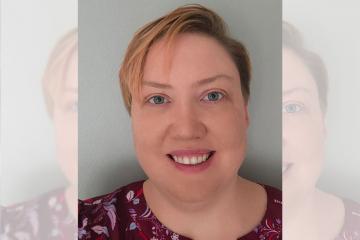
These classes have people of all ages, with all sorts of life experiences…We got to bring all of our experiences into our conversations, and I never felt like I was out of place. Once I was in the program, I never felt like I was too old or not capable.
— Evie Trainor, ’25 Human Services (Online)
Public Health at a Glance
95%
Employment or Graduate School
Within six months of graduation, 95% of Simmons undergraduates are employed or enrolled in graduate school.
*First Destinations Survey for 2023-2024
36
Credits
Build a strong foundation with 9 required courses (36 credits) in social work, inequalities, human behavior, policy, practice, and a human services capstone.
90%
Faculty in Practice
90% of Human Services faculty are actively practicing in their communities and bring that real-world experience into mentoring and teaching students.
Bring Change to Communities with a Human Services Capstone
In your Human Services capstone, you’ll focus on a real issue facing individuals, families, or communities and design a practical response. Maybe you’ll create a proposal to improve access to services at a community agency, develop a resource guide for a specific population, or evaluate how a policy is affecting people on the ground. The capstone will leave you with a polished project that showcases your knowledge and gives you something to share with employers or grad programs.

Transformative Online Human Services Education with Real-World Impact
Rooted in Boston’s long tradition of social work and social justice, Simmons brings you a Human Services education shaped by real conversations about equity, access, and community well-being. In small, discussion-based online classes, you’ll work closely with faculty and peers to examine real cases, understand the systems that affect people’s lives, and practice the skills you’ll use with clients and communities.