
Research
Working closely with faculty experts, our students put theory into practice through on-site and off-site research opportunities.
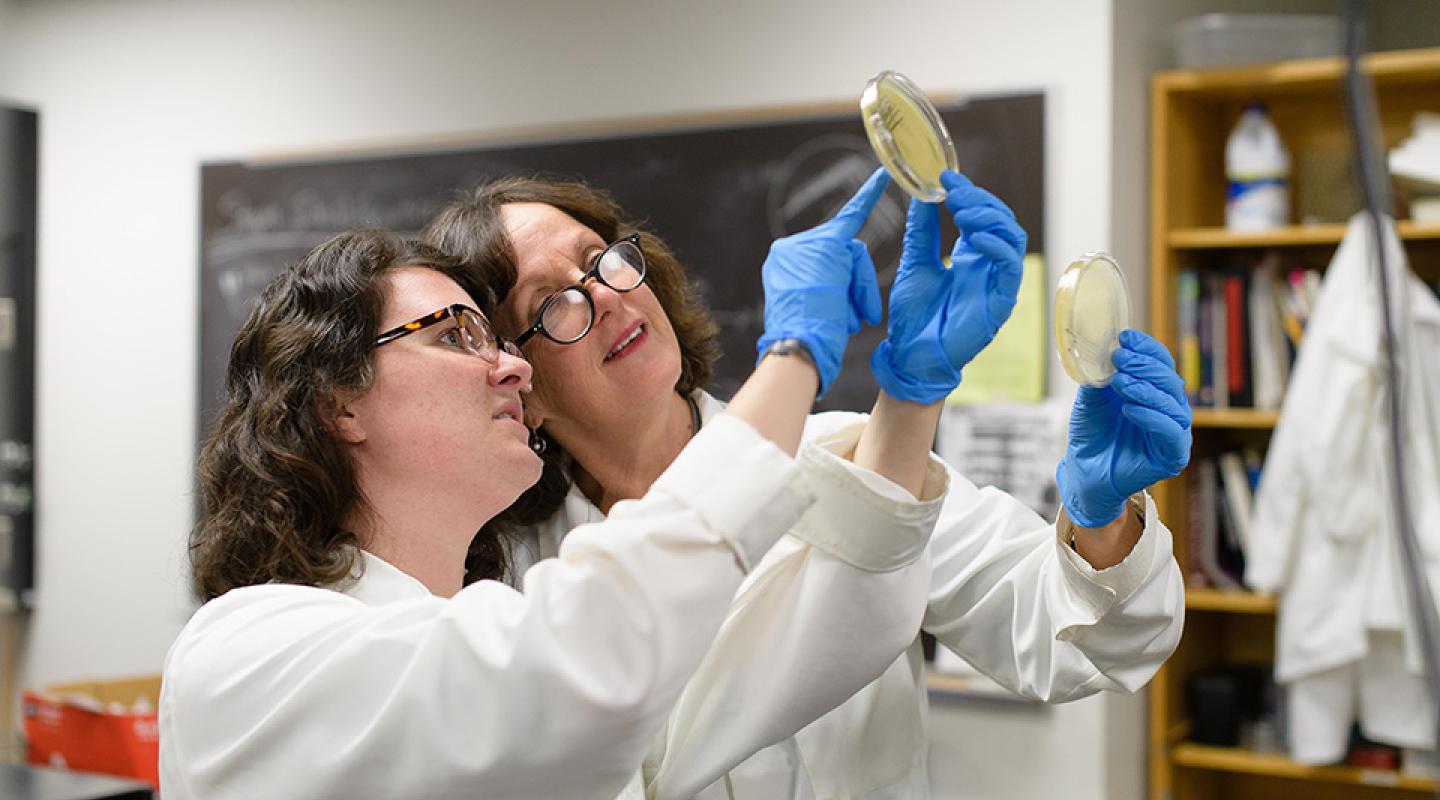
Our faculty are leaders in their fields and mentors in the classroom.
Our faculty and students are actively engaged in research, scholarship and creative work. They publish intriguing research articles, exhibit original artwork, share their expertise at major conferences — and so much more.
Working closely with a faculty mentor, our students conduct, present, and publish cutting-edge empirical research. You’ll gain hands-on experience in the classroom and graduate with a remarkable record of publications, professional experience, and an extensive portfolio.
“Faculty research and creative work are key ingredients for achieving the goals of our small university.”
— Provost Russell Pinizzotto
Research Centers and Resources
Research Labs
Our modern teaching laboratories are designed for high-impact, active-learning teaching and research practices and are capped at 16 students to increase faculty-student interactions. Four faculty-student research clusters foster interdisciplinary collaborations and include a biomedical ultrasound laboratory; a microscopy center; a separation, quantitation, and spectroscopy center, and three level two certified tissue culture and microorganisms laboratories.
Centers with a Focus on Research
Research is at the heart of the work done in many of the centers on campus.
Programs and Funds with a Research Component
The Office of Undergraduate Research and Fellowships offers a range of programs that support undergraduate academic and professional growth.
Student Research in the News
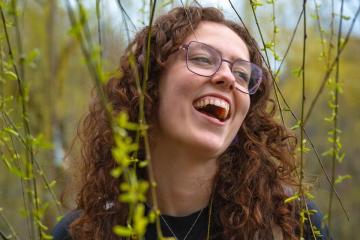
Discovering Purpose and Community through Art, Service, and Song
Arts Administration major Calla Savelson ’24 shares how she gained professional experience and build a community for herself during her time at Simmons.
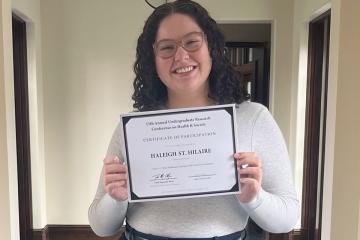
Developing a Personal Passion into to a Capstone Research Project
Exercise Science student and Barbara Lee Fellow Haleigh St.Hilaire ’24 explores the intersection of Exercise Science and Public Health through her internship at the Massachusetts State House.
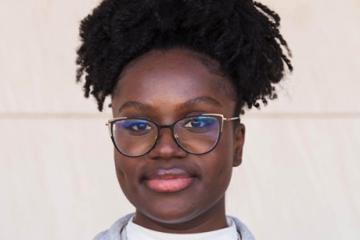
Discovering an Empowering Atmosphere, Supportive Mentors, and Leadership Opportunities at Simmons
Neurobiology major Debora Edouard ’24 discusses her favorite moments at Simmons, her research, and her unique experience as a first-generation college student.
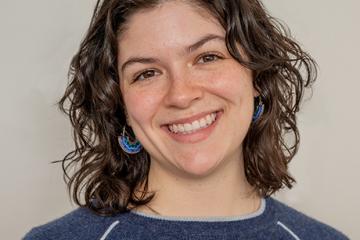
Enjoying the Opportunities at Simmons: From Studying Abroad to Internships to Research
Political Science and Spanish double major Estela Raya-Fouts ’24 discusses impactful internships, catching the travel bug, her favorite course and more Simmons memories.
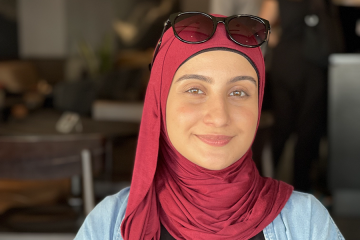
Inspired to Expand a Summer Research Project into an Independent Study
Biology major Leila Aydibi ’24 discusses getting involved on campus, participating in a research project, being a first-generation student, and some of her favorite Simmons courses.
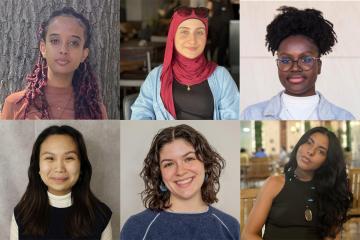
Congratulations to the 2024 Senior Scholars
The annual Senior Scholar Award is sponsored by the Provost's Office and the Office of Undergraduate Research and Fellowships. The award recognizes six graduating seniors for their outstanding scholarship and contribution to a field of study.
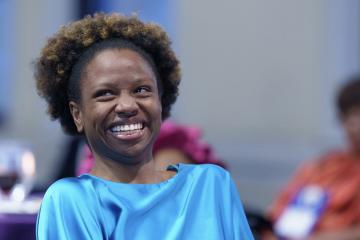
Student Researcher Sunei Clarke ’24 Reflects on Simmons Black Oral History Project
Public Health major and Chemistry minor Sunei Clarke ’24 participated in the Simmons Black Oral History Project, conducting interviews with alumnae/i to document and memorialize the experiences of Black students at Simmons through the generations. Clarke spoke with us about the process of creating oral histories and the value of Africana Studies for all majors.
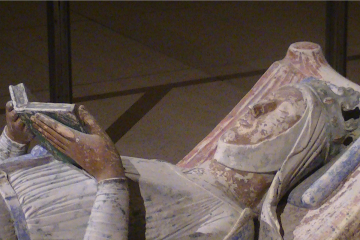
Diana Myers ’24MS Aspires to Increase Access to Medieval Archives
Graduate student Diana Myers is pursuing a Master’s in Library Science and Information Science with a concentration in Archives Management. She plans to combine her archival experience with her research on medieval Europe to facilitate the public’s access to rare, premodern materials.
Faculty Research in the News
Professor Jennifer Roecklein-Canfield Selected as a 2024 Fellow of the American Society for Biochemistry and Molecular Biology
Jennifer Roecklein-Canfield, Professor of Chemistry and Physics at Simmons, is among the 2024 cohort of Fellows within the American Society for Biochemistry and Molecular Biology (ASBMB). She spoke with us about receiving this honor, advocating for women in STEM, and reimagining mentorship.
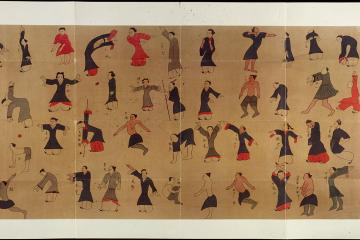
Assistant Professor of History Yunxin Li Examines Gendered Foundations of Ancient Chinese Medicine
In a recent article published in The Bulletin of the Jao Tsung-I Academy of Sinology, Assistant Professor of History Yunxin Li explores the role of women and gender in the theory and practice of medicine in ancient China. She spoke with us about her research and what she will reflect on during Women’s History Month.

Associate Professor Saher Selod Historicizes Islamophobia in the United States
On January 19, Simmons’ Office of Diversity, Equity, and Inclusion (ODEI) hosted “Islamophobia in the United States: Understanding Past and Present Anti-Muslim Discrimination,” a virtual lecture by Associate Professor of Sociology and Director of Research for the Institute of Social Policy and Understanding Saher Selod. This talk chronicled the history of anti-Muslim racism and demonstrated how 9/11 instituted a new era of the racialization of Muslims.

Professor of Education Daren Graves Co-Edits Forthcoming Book on Hip Hop Education
In January 2024, Bloomsbury Publishing (London) will release The Bloomsbury Handbook of Hip Hop Pedagogy, co-edited by Daren Graves, Professor of Education and Social Work at Simmons, and Dr. Lauren Leigh Kelly, an Associate Professor of Education at Rutgers University. This collection is “the first reference work to cover the theory, history, research methodologies, and practice of Hip Hop pedagogy.”
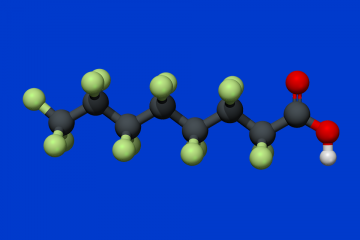
Associate Professor of Biology Eric Luth Co-Authors Scientific Article with Former Students
Neurobiologist Eric Luth recently co-authored a peer-reviewed article in the Journal of Toxicology and Environmental Health, Part A (October 2021) with several of his students: Celine Breton ’21, Kaitlyn Kessel ’23, Ariel Robinson ’19, and Kainat Altaf ’22. The piece traces developmental abnormalities among worm populations after exposure to environmental contaminants.
Why the World Needs Simmons: Insights on Contemporary Feminism from Professor Suzanne Leonard
Suzanne Leonard , Professor of Literature and Writing, and the director of the MA in Gender and Cultural Studies, teaches courses on Feminist Media Studies, Women's and Gender Studies, and American Literature at Simmons. The co-editor of Imagining We in...
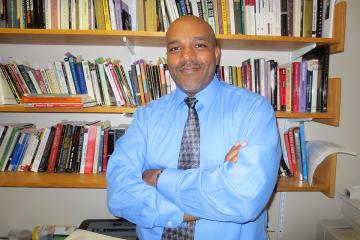
Professor of Literature and Writing Sheldon George Discusses Innovations of Black Women Writers
Professor and Department Chair Sheldon George has diverse research and teaching interests in literary and cultural theory, race, and psychoanalysis. He spoke with us about his new scholarship that explores Black women authors from around the world, as well as...
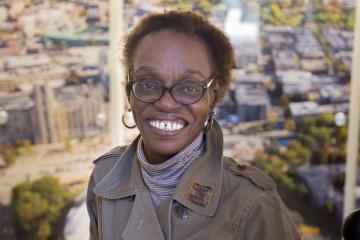
Professor of Social Work Johnnie Hamilton-Mason Researches Leadership and Advocacy of Boston’s Black Women
Founded in 1919, the League of Women for Community Service is a Boston-based Black women's organization that still exists today. According to Professor Hamilton-Mason , the League helped cultivate Black womanhood in a nurturing and supportive way. Members of the...
Alumnae/i Research in the News
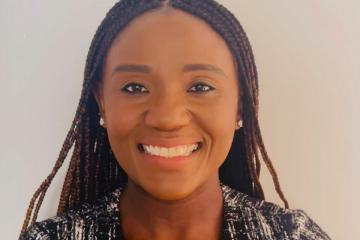
Mbita Mbao ‘22PhD Offers Wisdom and Caring for an Aging Population
When Mbita Mbao ’22PhD was looking for a doctoral program in social work, Simmons met all of her requirements: a Boston location and the ability to take all of her in-person classes in one day per week. More important than these criteria, Simmons had Dr. Johnnie Hamilton-Mason, Interim Director of the School of Social Work.

Dr. Beryl Irene Bailey ’81 Champions Content-Based Literacy in Educational Leadership Magazine
In a new article published in Educational Leadership, Dr. Beryl Irene Bailey identifies the reason for flailing literacy among elementary school students and proposes an innovative solution.
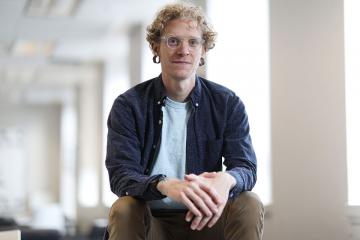
Kyle Ganson ’20PhD Broadens the Gender Perspectives of Eating Disorders
Kyle T. Ganson is an Assistant Professor at the University of Toronto, Factor-Inwentash Faculty of Social Work. As part of his studies at Simmons, he created the course “Social Work Assessment and Treatment of Eating Disorders,” to be taught in Spring 2024. We spoke to Ganson about his doctoral experience at Simmons and the inspiration behind the course.
Lynne Passanisi ’11 Reflects on the Broad Career Field a Math Degree Can Make Possible
What made you choose to study Mathematics at Simmons? Simmons had a great, small, close-knit community, with the bonus of being in the larger city of Boston — it had a little of everything! When I first visited Simmons, I...
Kaitlin Allair ’21MS Researches Effects of Teen Media Use for the Digital Wellness Lab
Research librarian Kaitlin Allair shares insights on problematic teen social media use, the dangers of "sharenting," and other aspects of her research.
Eva Piernas' Journey from Simmons University to Infectious Disease Research ('23)
How Did Eva's Time at Simmons University Shape Her Path in Science? Eva Piernas, a recent 2023 alumni, reflected upon her journey at Simmons University, where she majored in Neuroscience on the neurobiology track and minored in Chemistry. As she...
Geraldina Cruz '23 Presents Research at Brigham and Women's Radiology Research Symposium
Physics major Geraldina Cruz '23 recently participated in the annual Radiology Research Symposium at Brigham and Women's Hospital (BWH) on May 25. Cruz was one of just two undergraduates who presented research alongside seasoned researchers at BWH. They spoke with...
Monica Alves ’16 Discusses Recent Career Change and Passion for Poetry
Environmental Science major Monica Alves’s first major career revolved around water science . Recently, she has transitioned into oncology-related research data. In this interview, Alves imparts advice on changing careers and discusses her love for writing children’s poetry. Tell us...